What inspires you to write?
Writing helps me sort out my thoughts. It’s as simple as that. For me, there’s not some grand inspiration that transports me magically to my laptop to start putting words on a page. It’s not like that at all. My writing is oftentimes borne out of frustration. Frustration that there’s so much going on in the world and so much going on in my brain, and I can’t make any sense of any of it. When I’m in the act of writing, my brain quiets and becomes focused, funneling the frustration and chaos through a very thin pathway that travels out of my fingertips and onto the page. It’s not until I see how ideas fit together that I can actually make sense of it all. That, then, allows me to communicate my thoughts more clearly to other people.
Are you a full-time or part-time writer, and how does that affect your writing?
I would love to be a full-time writer. That’s the dream, but unfortunately, not the reality. Because I can’t devote all my time and thoughts to writing, I carve out time to do so. I set a clear intention, a clear output expectation, and take it from there while still allowing myself grace if I fall short of my planned goals. The thing is, if I wasn’t working, teaching, or caring for my family, I wouldn’t have much to write about. I’m not only a writer and an artist, but I’m also a living, breathing being with life experiences that I incorporate into my work.
Can you share a little bit about your latest book?
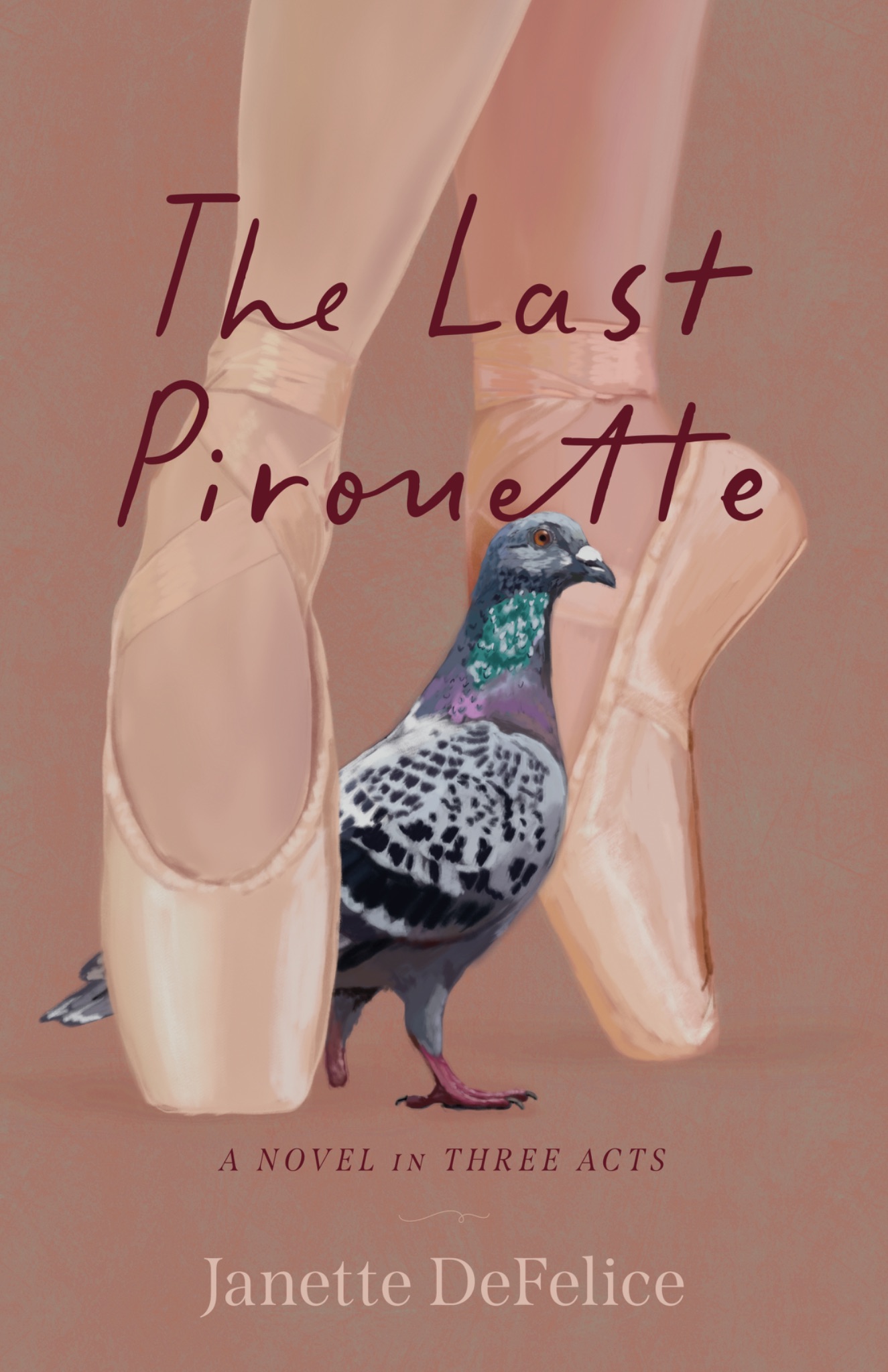
Absolutely! The Last Pirouette: A Novel in Three Acts is the most personal thing I’ve written. I have fallen in love with my main characters, Victoria and her 17-year-old, ballet-dancing daughter Delia. It’s not your traditional ballet novel. Instead of just focusing on the dancer herself, I also focus on the dancer’s mother. What motivates her to find so much meaning in her daughter’s dancing? What happens to her sense of purpose and her sense of self when her daughter grows up and goes out on her own? Delia’s mom is a sympathetic character, not a heartless woman pushing her daughter to live out her failed dreams, as we often see dance moms portrayed. It’s high time the mother’s story gets told.
What made you decide to sit down and start writing this book?
When my daughter was little, I put her in ballet class. As a former professional dancer myself, this was very life-affirming. I imagined how our future would play out. She would get a scholarship to a professional ballet school in New York, and I’d have to move out there to support her career. To think of a future like that was all so exciting. Needless to say, I may have gotten a little caught up in the idea of being a dance mom—until I realized my daughter did not like ballet class. I would force her to go and give her little gifts as a reward for completing her classes, but after a few months of this, it really wore me out because she made it clear that she REALLY did not want to go. She then forced me to realize that I had to respect her preferences in how she wanted to live her life.
With that personal realization, my perspective changed, and I started to observe the other dance mothers not as one of them, but as someone looking in from the outside. And because I was someone with some negative experiences in the dance world that I had theretofore pushed aside in the glow of my daughter, everything shifted. I observed other mothers living through their children at the dance studio with a more reasonable perspective. Those other mothers had never experienced life as professional dancers and never knew firsthand, like I did, what the professional dance world was like. How hard it was. How cutthroat it was. And paramount to that, how absolutely vulnerable young people could be in that world.
This book was kind of my swan song to the ballet dreams I once had for my daughter. I also brought into the story some of my own personal struggles through life. Additionally, I added some imagined struggles my daughter could have experienced had I forced her to follow through with my own vision of her life.
What was the hardest thing about writing your latest book?
Even though it is fiction, there is so much truth in it. And truth can be very uncomfortable. I saw a lot of myself and my own struggles as a former professional dancer, mom, and survivor in Victoria’s story. Victoria and Delia helped me give a voice to stories that were struggling to break free within me. Sharing the book with the world feels so risky to me because my heart is on those pages.
What did you enjoy most about writing this book?
Writing the dance sequences felt like I was actually dancing again, like I was in my 20s. Back then, I felt like I was in absolute control of every muscle in my body and had the power to make it do whatever I wanted it to do. Writing the dance sequences felt like that. I put on music, choreographed in my head, and then wrote it all down exactly as I envisioned it.
What is your next project?
My next project veers in a completely different direction. It is a medical/eco thriller, scheduled to be released in November 2027. My day job is as a professor of health sciences; my education and research have focused on climate change and how it affects human health. I took my research and turned it into a novel about a female public health leader who is trying to protect her community from a disease that has come about as a result of climate change. The common thread between my first two novels is that they focus on mid-life women, mothers of teenagers, who have their own guiding forces in the world.
Who are some of your favorite authors that you feel were influential in your work?
I’m very inspired by the amazingly prolific author Jodi Picoult. I love the amount of research she puts in before even beginning to write. And her plotting is very tight. I love that! For this work, I was also inspired by the moodiness of Megan Abbott’s books. There’s just that extra something special a female author brings to a work. Additionally, I found a ton of inspiration for my book through music, especially the music of Philip Glass.
What is one great lesson you have learned as a writer?
Something that keeps coming up is that female main characters are supposed to be “likable.” What does that even mean? I don’t have a clue. One great lesson I’ve learned about myself as a writer is that I have to stay true to the character. I will not write her so a reader feels comfortable with her. I write truth through fiction. I write so readers can work through their own discomfort with life and come out feeling more knowledgeable about themselves and what they think about the world. The world is not black and white; it is many shades and multi-dimensional; sometimes right is indistinguishable from wrong. I write so I can make sense of my world. I hope others reading what I’ve written find that, even though it’s sometimes difficult and uncomfortable, it helps them make sense of their worlds.
Want to know more about Janette DeFelice?


Leave a Comment