What inspires you to write?
Life, I write from real-life experiences, just from unexpected perspectives.
We see people in different situations every day and make quick judgments about them. What interests me is flipping that. Asking “what if?” and giving that person a backstory or a different angle.
I see a story in everything. That’s why I keep a TBW (to be written) list. It’s where I collect those moments that stand out, even if I’m not ready to turn them into a full story yet.
Why did you choose to write in your genre?
I started with what I like to read and watch.
A lot of stories in this space can feel predictable once you understand the formula. You can see what’s coming before it happens. I wanted to write something that didn’t feel like that.
So I write for the gap. The space where things don’t follow a clean pattern, where the story feels more real and less expected.
At this point, it feels less like I chose the genre and more like it chose me.
What role does research play in your writing?
Research plays a bigger role than people might expect, especially with a story like The Other Auntie.
Grace’s character is loosely inspired by my own experience growing up and witnessing my mother’s battle with addiction. As a child, you see things, but you don’t always understand them. Writing this book gave me the opportunity to learn more about addiction and detox. And not just from articles, but from conversations with people who have experienced it firsthand. I asked questions that weren’t always comfortable, but they helped me understand what that journey actually feels like, not just what it looks like.
That allowed me to write Grace with more depth and empathy. Not just as an “addict,” but as a person dealing with addiction, motherhood, and guilt.
It helped me move beyond surface level and into something that reads true for people who have experienced it.
Can you share a little bit about your latest book?
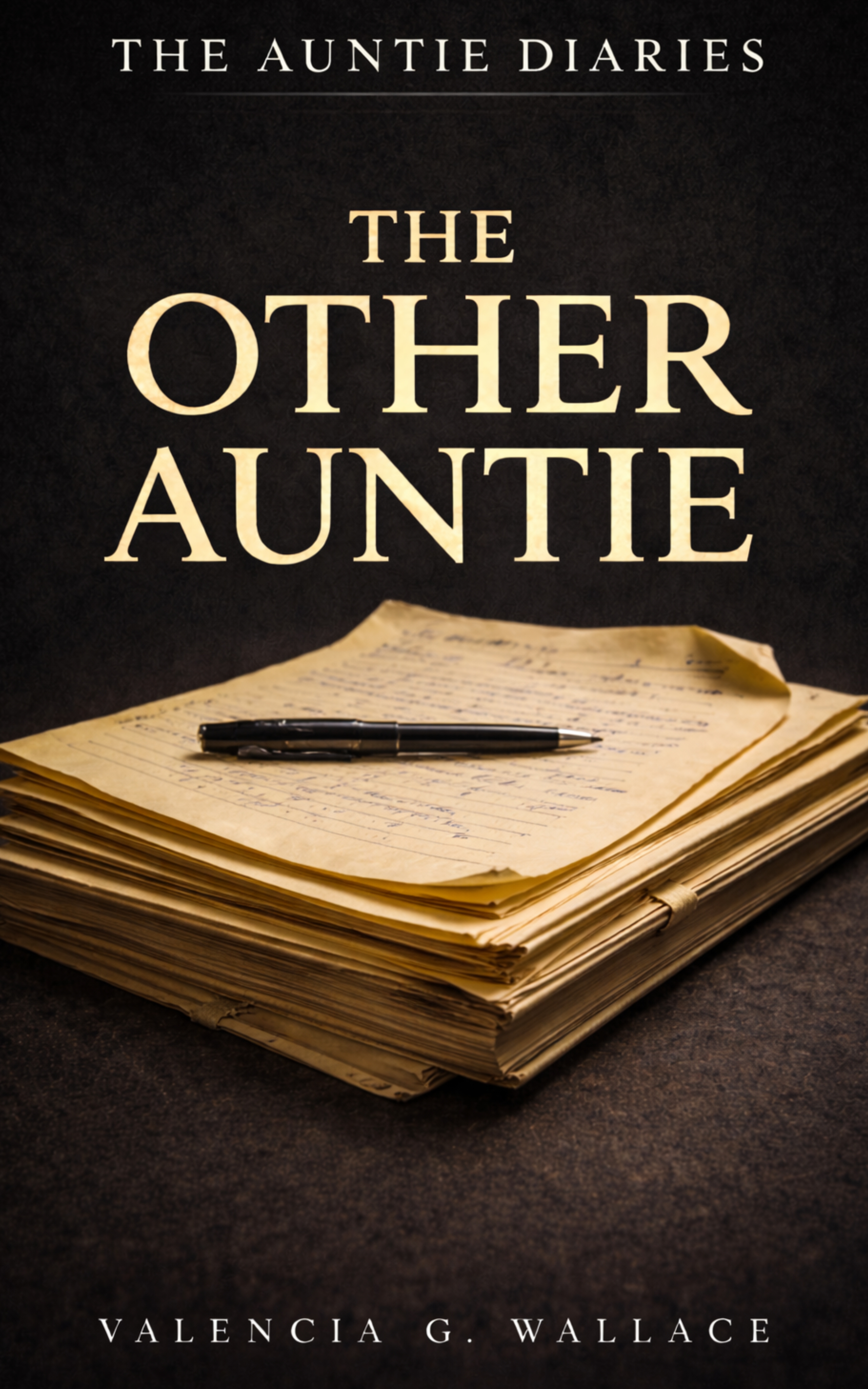
The Other Auntie is about the person in the family everybody trusts and the one nobody believes.
Naomi is the auntie people listen to and respect. She’s the one holding everything together. Grace is the opposite auntie. She’s an addict and the one everyone looks down on.
When Grace is forced into rehab, it looks like Naomi is stepping in to help raise her daughter, Joy. But as Grace begins to detox, she starts to remember what really happened the night her best friend died.
And the more she remembers, the more dangerous it becomes.
At its core, the story is about manipulation, perception, and what happens when the truth starts to surface, and the person who buried it has everything to lose.
What made you decide to sit down and start writing this book?
Honestly, it came from the weight of real life.
I’ve seen too many situations where the person causing the harm is the one everybody protects. Their reputation stays intact, and nobody really questions them, even when something feels off.
There’s always someone on the other side of that. The one who gets labeled, dismissed, or seen as the problem.
Especially in Southern families where loyalty runs deep, and people would rather keep the peace than tell the truth. Everybody knows what’s going on, but nobody says it out loud.
I needed to give a voice to that and show what it looks like when the story isn’t controlled by the same person anymore.
Who is your favorite character in your book and why?
Joy is my favorite character because she reminds me of myself at that age.
She’s in a situation she can’t control, trying to love a mother who is dealing with her own struggles. There’s a lot she doesn’t understand, but she feels everything.
She’s also older than her age in a lot of ways. Learning to survive in a space where she’s not protected does something to you. There’s a quiet awareness that builds, along with an anger you don’t really have permission to express because you’re still seen as just a child.
I think a lot of people can relate to that feeling of being young, aware, and trying to make sense of life.
What was the hardest thing about writing your latest book?
The hardest part was writing from different points of view and fully stepping into each character.
I didn’t want their voices to sound the same. I needed to feel what they were feeling to write them honestly.
Grace was the hardest.
Her chapters were emotional. I had to sit in addiction along with the guilt. There were moments where it felt too real, and I had to step away just to get myself together before I could keep writing.
But I think that’s also what made the story feel real. I didn’t just write it; I had to emotionally dive into it.
What is your next project?
I’m continuing The Auntie Diaries series with The Rich Auntie.
This next book shifts the focus and goes deeper into the family dynamic, especially how things play out for the next generation. The same themes are there, but the perspective changes, and the consequences start to show up in a different way.
So while it connects to The Other Auntie, it also stands on its own and expands the world in a way that raises the stakes.
Tell us something unique about you.
I think in threes. Every story idea comes to me as a series: the story, what came before it, and what comes next. I may not write all three right away, but that’s how it shows up to me.
That’s actually how The Auntie Diaries came about.
I started writing The Rich Auntie first, then realized there was a whole story that needed to be told before it. That became The Other Auntie. The Last Auntie is what comes next.
I’m not just writing one story. I’m writing everything around it, too.
Want to learn more about Valencia G. Wallace?

 Waking Writer
Leave a Comment