Why did you choose to write in your genre?
I chose to blend romance, supernatural intrigue, and intercultural fiction because my life has been a bridge between worlds: Haiti, Canada, USA, and other countries that I have visited, journalism and law, disaster and rebuilding. Romance allows me to explore deep human emotion, while the supernatural, rooted in real Haitian voodoo, lets me reveal invisible chains like modern slavery. This genre gives me the freedom to mirror complex truths.
What is the biggest thing that people think they know about your genre?
Many think romantic supernatural fiction is pure escape or fantasy, often reducing voodoo to Hollywood stereotypes of curses and evil.
What is the most important thing that people don’t know about your genre but that you would like for them to know?
That zombification is not just folklore. It’s a real phenomenon I documented as a journalist in Haiti. It can be a metaphor for 21st‑century slavery: people stripped of will, trapped in modern chains. My genre allows me to expose that truth through story, not just reportage.
Did you independently or “self” publish, or did you go the “traditional” publishing route, and why?
I chose independent publishing. After 20+ years in journalism and the UN, I wanted full creative control over my voice and the cultural authenticity of Haiti’s stories. Traditional routes often filter or dilute narratives from fragile societies. Self-publishing lets me hold the mirror exactly as I see it.
What advice would you give to aspiring authors?
Write what you have survived. Your deepest wounds and sharpest observations are your greatest material. Also, read beyond your genre, law, geopolitics, and history, because fiction that reflects real systems of power lasts longer than fleeting trends.
Can you share a little bit about your latest book?
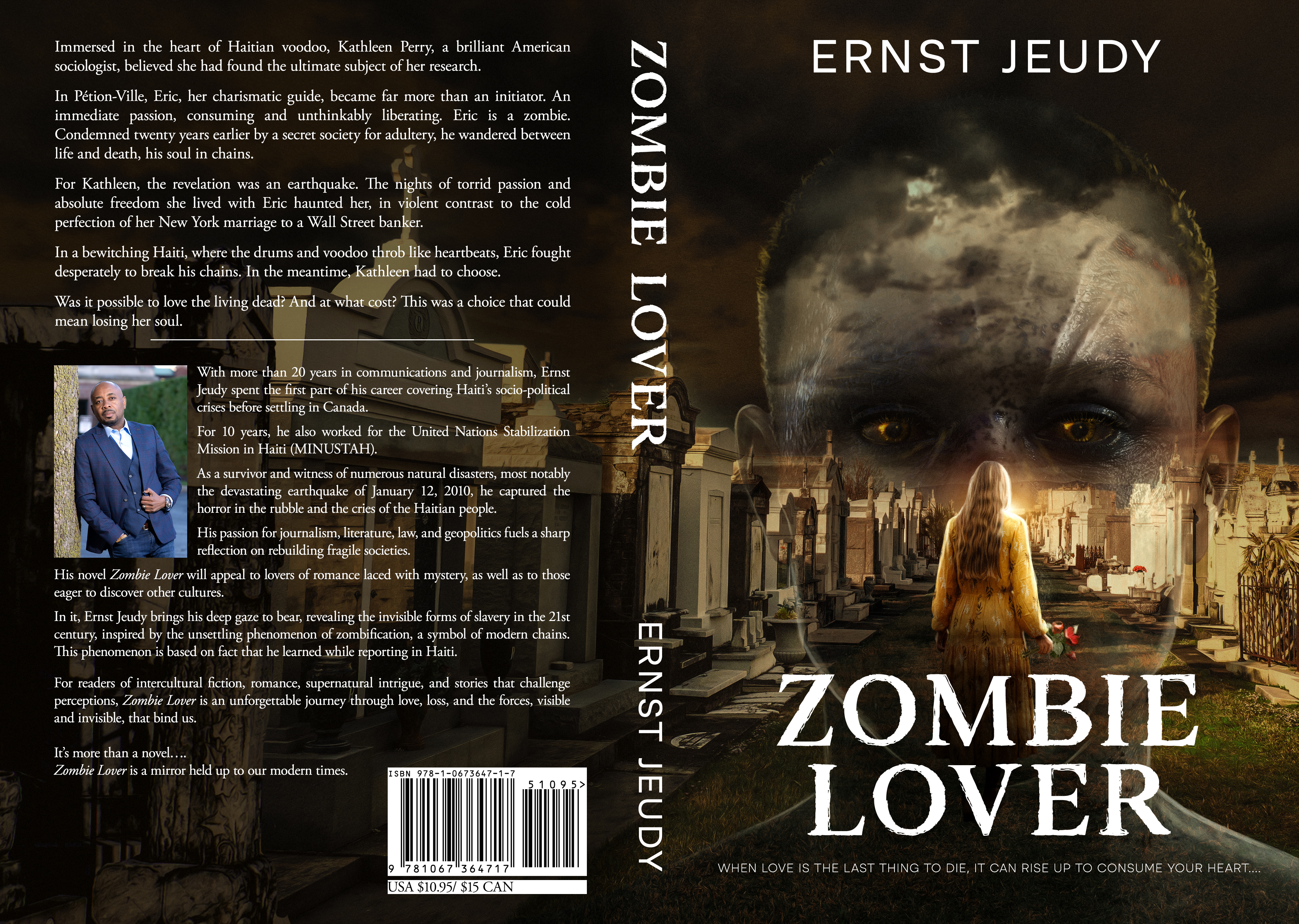
Zombie Lover follows Kathleen Perry, an American sociologist who falls passionately in love with Eric, a Haitian zombie condemned by a secret society for adultery. Their affair forces her to choose between a sterile Wall Street marriage and a dangerous, liberating love that could cost her soul. It’s a journey through voodoo, loss, and modern bondage.
What made you decide to sit down and start writing this book?
The January 12, 2010 earthquake. While reporting in the rubble, I witnessed horror but also profound human connection. I realized that Haiti’s invisible forms of slavery—social, economic, spiritual—are as destructive as any natural disaster. I began writing to give those chains a name and a story.
Tell us more about your main character. What inspired you to develop this character?
Kathleen Perry is inspired by the many foreign researchers and aid workers I met in Haiti who came looking for data but left transformed. She represents the clash between Western rationalism and Haiti’s spiritual reality. Her affair with Eric is not just romance. It’s a crisis of perception, forcing her to see that the “living dead” exist in other forms in our lives.
What is one great lesson you have learned as a writer?
That truth is stronger than the plot. When you write from real experience, like covering coups, disasters, or zombification, your story will resonate even when it defies genre expectations. Don’t soften reality for comfort.
What is your next project?
I also have another intercultural novel in progress, this time exploring the invisible chains that contribute to wars in the world.
Want to learn more about Ernst Jeudy?


 Waking Writer
Leave a Comment