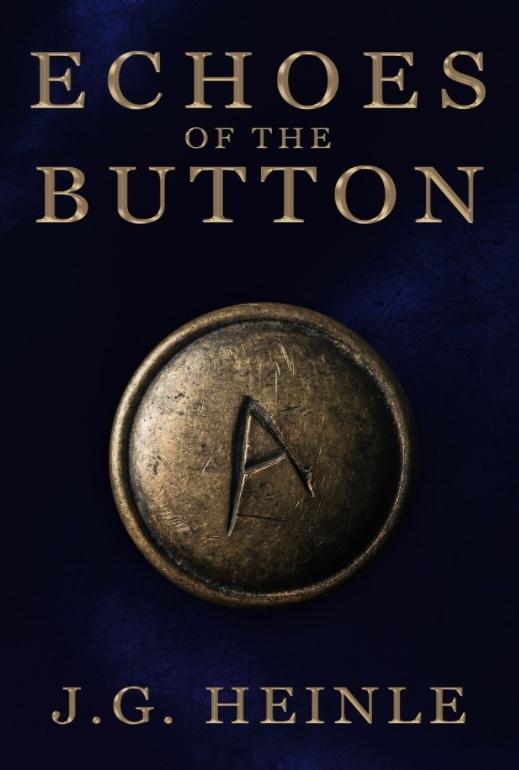
Do you use a pen name or alias? What influenced you to make this decision, and how does it impact what you write?
Yes, I write under the pen name J. G. Heinle. When I decided to publish my first novel, I wanted to maintain a degree of separation between my personal life and my life as an author.
Writing is a very personal experience, even when the stories themselves are fictional. You inevitably put pieces of yourself into your characters, whether it’s through their experiences, emotions, interests, or the way they see the world.
Using a pen name gives me a little privacy while allowing me to share those stories with readers. It also gives me the freedom to explore different genres, characters, and ideas without feeling that everything I write has to be connected to my personal identity.
Ultimately, I want readers to connect with the stories and the characters. If someone finishes one of my books and finds themselves still thinking about the characters long after turning the final page, then I’ve accomplished what I set out to do.
What have you written so far?
Echoes of the Button is my debut novel and the first book in a planned series. It’s the first story I’ve brought all the way through the writing, editing, and publishing process, and seeing it become an actual book has been an incredibly rewarding experience.
I’ve already begun developing the second book in the series, which continues exploring the consequences of the events in the first novel. I’m also planning a shorter companion book, Before the Button, that will give readers another perspective on the story.
Beyond the Echoes series, I have other ideas I’m interested in exploring, including supernatural horror and psychological suspense. I enjoy stories that combine unusual circumstances with believable characters and genuine human emotions.
For now, though, my primary focus is building the Echoes series and giving readers a story that stays with them long after they’ve finished the book.
Do you work with an outline or plot sketch, or do you prefer to let a general idea guide your writing?
I use a combination of both. I usually begin with a general idea, something that interests me enough to start asking questions about where the story could go. From there, I develop the characters, the major events, and a general direction for the plot.
With Echoes of the Button, having a plan was especially important because of the time-travel element. When you’re dealing with different periods in history and the possibility of changing events in the past, you have to pay attention to the details. One small inconsistency can affect the entire story.
That said, I don’t like being so tied to an outline that the story loses its ability to evolve. Sometimes a character develops in a direction I hadn’t originally anticipated, or a scene reveals an opportunity I hadn’t considered. When that happens, I’m willing to explore it as long as it makes sense within the larger story.
I think of an outline as a roadmap rather than a set of instructions. I like knowing where I’m going, but I also enjoy discovering things along the way.
Can you share a little bit about your latest book?
My latest novel, Echoes of the Button, is a time-travel story that blends science fiction, historical fiction, suspense, and an emotional story about love, loss, and second chances.
At its heart, it’s about a man named Eric who loses his wife, Ashley, in a tragic accident. Years later, while raising their young daughter, he discovers something extraordinary connected to a colonial-era brass button. What begins as an attempt to understand an impossible discovery eventually presents him with a choice that could change history.
But changing the past comes with consequences, and Eric must decide just how much he’s willing to sacrifice for the chance to save the woman he loves.
Although time travel is central to the novel, I’ve always viewed it as more than a science-fiction story. It’s about grief, fatherhood, the choices we make, and the lengths someone might go to for the people they love.
Echoes of the Button is the first book in the Echoes series, and while it tells a complete story, it also lays the foundation for a much larger journey through time and the consequences of changing history.
Echoes of the Button is my debut novel and the first book in a planned series. It’s the first story I’ve brought all the way through the writing, editing, and publishing process, and seeing it become an actual book has been an incredibly rewarding experience.
I’ve already begun developing the second book in the series, which continues exploring the consequences of the events in the first novel. I’m also planning a shorter companion book, Before the Button, that will give readers another perspective on the story.
Beyond the Echoes series, I have other ideas I’m interested in exploring, including supernatural horror and psychological suspense. I enjoy stories that combine unusual circumstances with believable characters and genuine human emotions.
For now, though, my primary focus is building the Echoes series and giving readers a story that stays with them long after they’ve finished the book.
What made you decide to sit down and start writing this book?
I’ve always had an interest in history, particularly early American history, and I’ve spent a lot of time outdoors metal detecting. There’s something fascinating about finding an object that’s been buried for hundreds of years and wondering about the person who last held it. Who were they? What was their life like? How did that object end up where I found it?
That curiosity helped shape the idea behind Echoes of the Button. I started thinking about what might happen if an ordinary discovery turned out to be something extraordinary. What if an object from the past could somehow connect two different periods in time?
From there, the story began to grow. I didn’t want to write a time-travel novel simply about traveling through history. I wanted the journey to mean something personal to the main character. That’s where the themes of love, loss, and second chances became central to the story.
Eventually, the idea had developed enough that I decided it was time to stop thinking about writing a book and actually sit down and write one.
What began as a simple idea about a historical artifact became something much larger than I originally imagined, and ultimately the beginning of the Echoes series.
Tell us more about your main character. What inspired you to develop this character?
The main character in Echoes of the Button is Eric, a husband, father, and an ordinary man who finds himself facing an extraordinary situation.
What I wanted most was to create someone readers could relate to. Eric isn’t a superhero, and he doesn’t begin the story looking for an adventure. He’s a man who has experienced a devastating loss and is trying to do the best he can for his young daughter while carrying the grief of losing his wife, Ashley.
One of the things I wanted to explore through Eric was how love and grief can influence the decisions we make. He’s intelligent, determined, and sometimes stubborn, but he’s also human. He makes mistakes, struggles with difficult choices, and doesn’t always know whether he’s doing the right thing.
His relationship with his daughter was especially important to me. I wanted readers to see that, despite everything he’s been through, being her father remains at the center of his life. That relationship gives the story much of its emotional weight.
As the novel progresses, Eric finds himself confronting possibilities that most people would consider impossible. But beneath the science fiction and time travel, his motivations remain deeply personal.
Ultimately, I wanted to write about an ordinary man facing an impossible choice and explore what love, responsibility, and sacrifice really mean when there are no easy answers.
What was the hardest thing about writing your latest book?
One of the biggest challenges in writing Echoes of the Button was making sure everything fit together, particularly when it came to the time-travel elements. When you’re writing a story that moves between different periods in history, even a small detail can create problems later. I spent a considerable amount of time working through the timeline, checking continuity, and making sure the events followed the rules I’d established for the story.
Another challenge was balancing the science fiction with the emotional side of the novel. I wanted the time travel to feel believable within the world I’d created, but I never wanted the technical aspects to overshadow the characters. At its heart, the story is about a man dealing with grief, raising his daughter, and facing decisions that could change everything.
I also found that writing emotionally difficult scenes required a different kind of effort. It’s one thing to imagine how a character might feel in a particular situation, but it’s another to put those emotions on the page in a way that feels genuine without becoming overly dramatic.
Ultimately, the hardest part was bringing all those elements together into a story that felt natural and believable. I wanted readers to become invested in Eric and his journey, even when the circumstances surrounding him were anything but ordinary.
What did you enjoy most about writing this book?
What I enjoyed most about writing Echoes of the Button was watching the story and its characters come to life. What began as an idea about a colonial-era brass button and the possibility of time travel gradually developed into something much more personal and complex than I originally imagined.
I particularly enjoyed developing the relationships between the characters. Eric’s relationship with his daughter, his memories of Ashley, and the friendships he develops throughout the story became just as important to me as the science-fiction elements. As I spent more time writing, the characters began to feel less like people I’d invented and more like people I’d come to know.
I also really enjoyed bringing history into the story. I’ve always been fascinated by the past, and writing about colonial America gave me an opportunity to explore that interest in a different way. There’s something exciting about imagining what it would be like to actually experience a period of history rather than simply reading about it.
Perhaps the most rewarding part was seeing everything come together. Watching an idea grow into a complete novel, with characters, relationships, and a story that I hope readers will connect with, was an experience I’ll never forget.
And now that the first book is finished, one of the things I’m most excited about is knowing that these characters and their stories aren’t finished yet.
What is your next project?
My next project is the second book in the Echoes series, which I’m currently working on. While Echoes of the Button tells a complete story, it also sets certain events in motion that have consequences far beyond the ending of the first novel.
Book Two will explore those consequences from a different perspective, introducing new mysteries while building on the characters and events readers have already experienced. One of the central ideas I’m exploring is whether changing history truly erases everything that came before. After all, not everything that was lost is necessarily gone, and some timelines may leave behind more than anyone realizes.
I’m particularly excited about exploring the emotional consequences of those changes. The decisions made in the first book don’t simply disappear into history. They continue to affect people who may not even realize their lives have been shaped by events they can no longer remember.
Beyond the Echoes series, I also have ideas for other novels, including a supernatural horror story that combines psychological suspense with elements of romance.
For now, though, my primary focus is continuing the Echoes series. There’s a much larger story unfolding, and I’m looking forward to sharing where it goes next.
What is one great lesson you have learned as a writer?
One of the most important lessons I’ve learned is that writing a book takes far more than simply having a good idea. It takes patience, persistence, and a willingness to go back and improve something you may have already spent hours working on.
When I started writing Echoes of the Button, I knew the story I wanted to tell, but I quickly discovered that getting it onto the page was only part of the process. There were scenes that needed rewriting, dialogue that didn’t quite sound right, and details that required more attention than I’d originally anticipated.
I also learned how important it is to be willing to question your own writing. Sometimes a scene you really like doesn’t work as well as you thought it did. Other times, something that seemed insignificant when you first wrote it turns out to be one of the most meaningful parts of the story.
But perhaps the biggest lesson was learning not to rush the process. It’s tempting to want to finish a chapter, move on to the next one, and eventually reach that final page. I’ve learned that taking the time to get things right is far more rewarding than simply getting them done.
Finishing my first novel taught me that writing isn’t just about inspiration. It’s about commitment to the story, the characters, and ultimately the readers who will experience it.
And if there’s one thing I’ll carry into my future books, it’s that the first draft tells the story, but the revisions help bring it to life.
Tell us something unique about you.
One thing readers might find interesting is that I’m a single dad raising two teenagers. Being a father is the most important part of my life, and I think that experience has naturally influenced the way I write about family and relationships.
In Echoes of the Button, Eric is raising his young daughter while trying to navigate the grief of losing his wife. Although his circumstances are very different from my own, I understand the challenges, responsibilities, and rewards of raising children. I also understand how deeply being a parent can shape the decisions you make.
Outside of writing and being a dad, I’m an avid outdoorsman with a passion for metal detecting and early American history. I enjoy discovering objects from the past and imagining the lives of the people who once owned them.
Looking back, I can see how those different parts of my life found their way into Echoes of the Button. My love of history helped inspire the story, while my experiences as a father helped shape its emotional heart.
Want to learn more about J.G. Heinle?


Leave a Comment