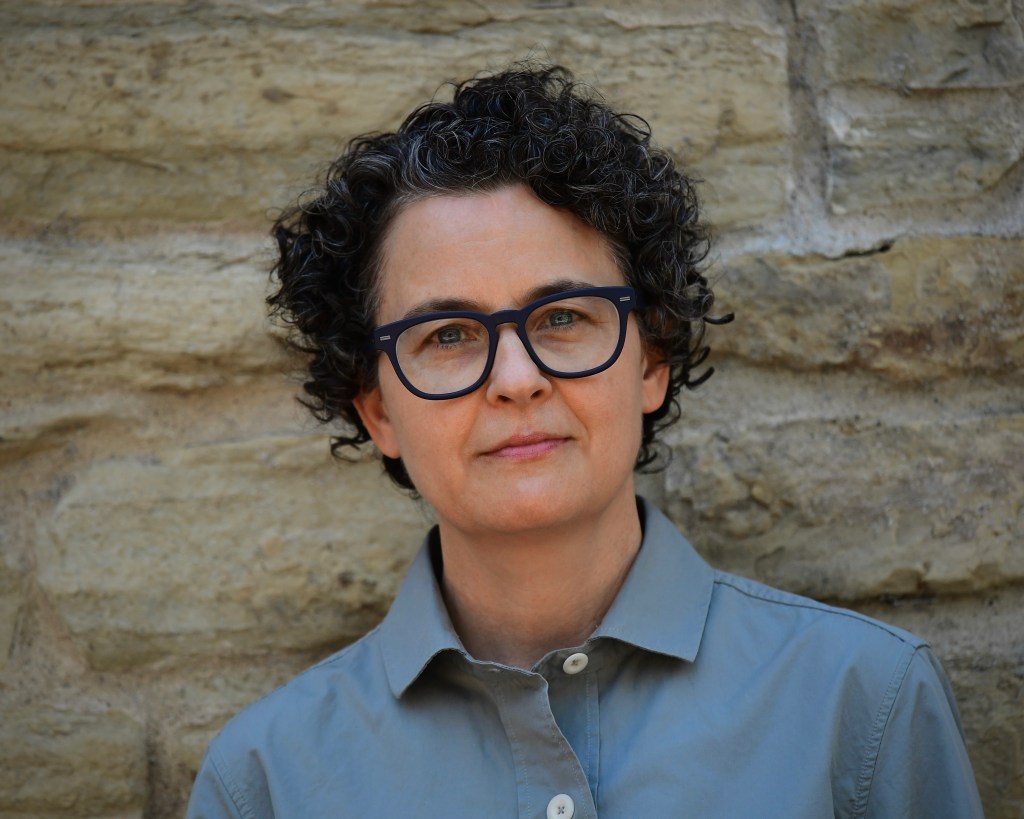
When did you first consider yourself a writer?
I started thinking of myself as a writer as a kid. My first writing was poetry. I subscribed to a magazine called Daisy that published poetry, so I’d submit to that. In middle school, a poet-in-residence taught writing workshops at my school. She encouraged my use of meter, rhyme, and imagery.
What day jobs have you held, and how have they influenced your writing?
I’ve had a day career in educational publishing, creating books and digital content for students and teachers. Collaborating with writers, editors, and copy editors, and poring over style manuals, certainly sharpened my language skills. Clarity and readability matter, as do rules and decisions about when and how to break them.
Can you share a little bit about your latest book?
Little Cavendish is a literary novella that asks the question, “What if your chosen family includes a sibling you left behind?” It takes place in the summer of 1989. Iris Cavendish has been in flight, estranged from the family she had to leave to survive, but soaring in her career as a flight attendant. Emboldened by a move into her own apartment and encounters with Vangie, a woman she might love, Iris sets out to reunite with Luke, the younger brother she left behind. In a time before cell phones, GPS, or internet access, Iris tracks down Luke at college in New Mexico, and flies there to find him. Little Cavendish is the story of a reunion, but it’s also a mystery about childhood.
What made you decide to sit down and start writing this book?
Writing Little Cavendish, I was thinking about how making it from childhood to adulthood can be like getting across an abyss. You can leap, you can fall, you can crawl up the other side. I was interested in writing about a young person who is determined to land solidly and safely on the other side of the abyss.
Tell us more about your main character. What inspired you to develop this character?
Iris Cavendish is 27. She’s a flight attendant who has meticulously built a life for herself. My first image of Iris was her sitting alone in the new apartment where she’s now going to live. A new beginning. Iris is a novice, in the sense of being newly arrived with much to learn. She’s entering the next chapter of her life and is aware of this. When she comes out as a lesbian—to herself as much as to her brother— she says, “I’m just starting out.” We learn that Iris has a troubled past. Life has not been easy for her. We also learn that she’s steel-willed and has a childlike belief in herself. At the start of the novella, she’s achieved a new level of stability, and that spurs her to search for her brother.
Is there anything you find particularly challenging in your writing?
After I finish a first draft and move into revision, it can be challenging to hold the whole story in mind, both the present state of my manuscript and where I want to take it. Toggling between big narrative arc and cascading details takes tremendous focus.
How do you think you’ve evolved creatively?
I’m more aware of the relationship between learning and writing creatively. If I don’t know about something that I want to write about, imagination takes me only so far. At a certain point, I need to learn, whether through hands-on experience, travel, reading, conversation, practice—there are so many modes of learning. Learning about a thing gives me the language I need to bring it into my writing.
Who are some of your favorite authors that you feel were influential in your work?
I’m inspired by courageous writers, writers of books I can return to and keep learning from: Gustave Flaubert, Patricia Highsmith, Toni Morrison, and Edmund White are foundational influences. Among contemporary writers, I’m influenced by works of Zadie Smith (fiction and essays), Katie Kitamura, Garth Greenwell, Constance Debré, Catherine Lacey, and Vigdis Hjorth.
What is one great lesson you have learned as a writer?
Research isn’t writing. Reading isn’t writing. Only writing is writing. Literature is art made from words. It’s essential to get the words out.
If there was one thing you could do to change the publishing and literary world, what would it be?
I’d increase the breadth and depth of critical writing about literature. I try to impact this through the choices I make as a literary critic, shining the spotlight on books from independent and university presses, works in translation, and works by LGBTQ authors—books that readers might not otherwise encounter.
Want to learn more about Lori O’Dea?



Leave a Comment