What inspires you to write?
Ever since high school, I’ve had this fire-in-the-belly to tell stories in a world I find endlessly fascinating. I also get motivated learning about an injustice—someone screwed over, someone glossed over by history—then exposing it to restore some balance.
What day jobs have you held, and how have they influenced your writing?
Being a newspaper reporter for the first half of my career was an ideal steppingstone to narrative writing. You learn about human nature. You learn the contradictions inherent in everyday life. You write about heartbreak, and you write about the good-hearted, and mostly you chase the ever-intriguing “why” behind people’s actions.
What role does research play in your writing?
A giant part. Whether you’re writing about an era or a current topic, context is everything if you want to establish believability as a world-builder. To gain that context, you have to throw yourself at the subject. For me, that’s gobbling up history books and biographies, watching documentaries, and spending time at the epicenter.
What advice would you give to aspiring authors?
Simple. Block out the noise of what other people think you should write and create the book you yourself would long to read. And embrace the crappy first draft: it’s your path to the golden one.
Can you share a little bit about your latest book?
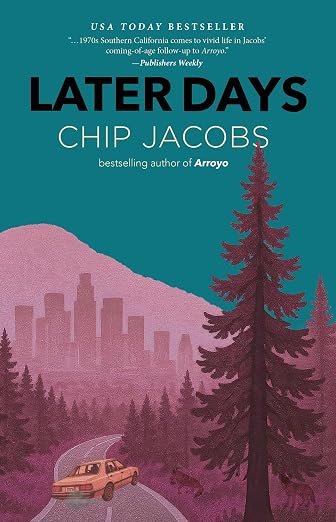
It’s the story of two unlikely friends at a Lord-of-the-Flies-esque prep school in late-seventies LA who alternate rescuing the other from dark home lives and self-inflicted stupidity. They reconnect twenty years later as time ticks down on these once-promising young men.
What made you decide to sit down and start writing this book?
It began in real life, when a dying former classmate—among the most brilliant minds at a school full of them—asked me to help him compose an apology letter over a reckless stunt from long ago.
Who is your favorite character in your book and why?
I’m quite fond of “Eddy,” one of two girls in a senior class of thirty-eight at a historic all-boys prep school going coed in 1980. Eddy is based on a close friend of mine named Annie, a curly-haired, Pinto-driving old soul a year ahead of us. We met her on a prank phone call that lasted six hours. Afterward, she functioned as a den mother keeping us driving wasted or otherwise screwing up our futures. I also needed a quirky, female character smarter than the boys without needing to advertise that fact.
If your book were made into a movie, who would you cast?
Paul Mescal or Ben Feldman.
How do you think you’ve evolved creatively?
I see the world and people with more empathy and fewer preconceived judgments. Instead, I crave to unpack why humans feel misunderstood or lost, and resist the urge to categorize them in a glib manner. I’m also less concerned with trying to impress readers with poetic worldplay, and more focused on milking the emotion and conflict out of every scene.
Want to learn more about Chip Jacobs?


Leave a Comment