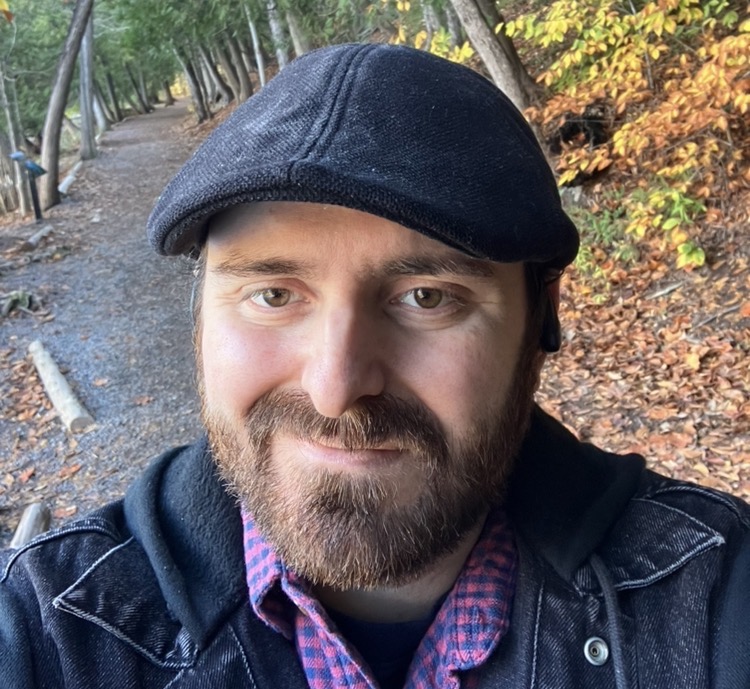
What inspires you to write?
What inspires me to write is the experience of being alive. The beauty of it, the uncertainty, the heartbreak, the humor, and those fleeting moments when everything seems to make sense without needing an explanation.
I began writing poetry at age 23, during a period of spiritual exploration that fundamentally changed how I understood myself and the world around me. I was discovering the teachings of people like Ram Dass and Neem Karoli Baba, and I found myself wanting to express the things I was beginning to recognize about love, compassion, and our connection to one another.
Over time, writing became less about trying to explain what I was experiencing and more about allowing those experiences to speak for themselves.
I’m inspired by ordinary moments as much as extraordinary ones. A conversation, a walk through the woods, caring for someone I love, or simply noticing something beautiful that I might otherwise have overlooked.
I think there’s something remarkable about being human. We spend so much of our lives searching for meaning, sometimes without realizing how much of it is already present in the moments we’re living.
Writing is my way of paying attention to those moments and sharing what I find.
When did you first consider yourself a writer?
I don’t know that there was ever a particular moment when I sat down and decided I was a writer. In some ways, I think the writing decided that for me.
I was 23 when I began writing poetry. I’d been reading The Book of Mastery by Paul Selig, and something about that experience opened a door I hadn’t known existed. I started putting words on paper, and before long, I realized I had found a way to express things I’d never quite been able to articulate.
At first, I wasn’t thinking about publishing books or building a career. I was simply writing because I felt compelled to. There was something deeply fulfilling about taking an experience or an insight and giving it a life of its own through language.
Even after publishing my first books, I don’t think I immediately adopted the identity of a writer. I was still just someone who loved writing.
Eventually, though, I realized that being a writer wasn’t something I needed permission to call myself. It was something I was already doing.
You don’t become a writer when someone publishes you, buys your book, or tells you that your work matters.
You become a writer when you write.
Why did you choose to write in your genre?
In many ways, I feel that poetry chose me.
I didn’t begin writing with the intention of becoming a poet. I was having experiences and realizations that I wanted to express, and poetry seemed to be the most natural language for them.
What I love about poetry is that it doesn’t always need to explain itself. A poem can communicate something that might take pages of prose to describe, and sometimes it can reach a person in a way that an explanation never could.
Spirituality and poetry have always felt closely connected to me because both invite us to look beyond the surface of things. They ask us to become curious about our experiences, our relationships, and the deeper questions of being human.
I also appreciate that poetry leaves room for the reader. Two people can read the same poem and discover entirely different meanings, each shaped by their own lives.
I don’t want my writing to tell people what to believe. I’d much rather offer something that encourages them to explore what they already know within themselves.
What is the most important thing that people don’t know about your genre but that you would like for them to know?
I think one of the biggest misconceptions about poetry is that it needs to be complicated to be meaningful.
There’s sometimes an expectation that a poem should be difficult to understand, filled with elaborate language or hidden meanings that require careful interpretation.
But I believe simplicity can be extraordinarily powerful.
A few honest words can change the way someone sees themselves. A short poem can offer comfort during grief, inspire a moment of courage, or remind someone that they’re not alone.
That doesn’t mean poetry should always be simple. There’s tremendous beauty in complexity, too. But accessibility and depth aren’t opposites.
Some of the most meaningful things we experience in life are also the simplest: love, kindness, forgiveness, wonder, and connection.
I think poetry has a remarkable ability to bring us back to those experiences.
And perhaps the most important thing I’d want readers to know is that they don’t need to be experts in poetry to enjoy it. They only need to be willing to feel something.
What day jobs have you held, and how have they influenced your writing?
I’ve had a variety of jobs throughout my life, and each has shaped the way I understand people.
I worked at Wegmans when I was younger, eventually managed a Barnes & Noble café, and even opened a small bookstore called Little Light during the time I lived in Northern California.
Working in a bookstore was particularly meaningful because I’ve always loved the relationship between books and the people who discover them. There’s something special about knowing that a book can find its way into someone’s life at exactly the right moment.
These days, one of the most meaningful roles in my life is helping care for my grandmother, Patricia, who has been experiencing dementia.
That experience has taught me things about patience, presence, love, and the passage of time that I don’t think I could have learned any other way.
When someone you love begins experiencing the world differently, you start recognizing how much of a relationship exists beyond ordinary conversation. Sometimes love is expressed through a familiar smile, a shared laugh, or simply sitting together.
My grandmother and I have also worked on a book about our journey together.
I think every experience I’ve had, whether working with customers, meeting strangers, or caring for family, has reinforced something that appears throughout my poetry: every person carries a world within them, and there’s always more to someone than what we see on the surface.
What have you written so far?
I’ve independently published a number of poetry collections and books of spiritual affirmations over the years.
Some of my collections include Lost in Wonder, Rhymes with Divine Ties, The Magic of the Moment, Leave Fear Behind, My Heart as the Map, and Between Fear & Love.
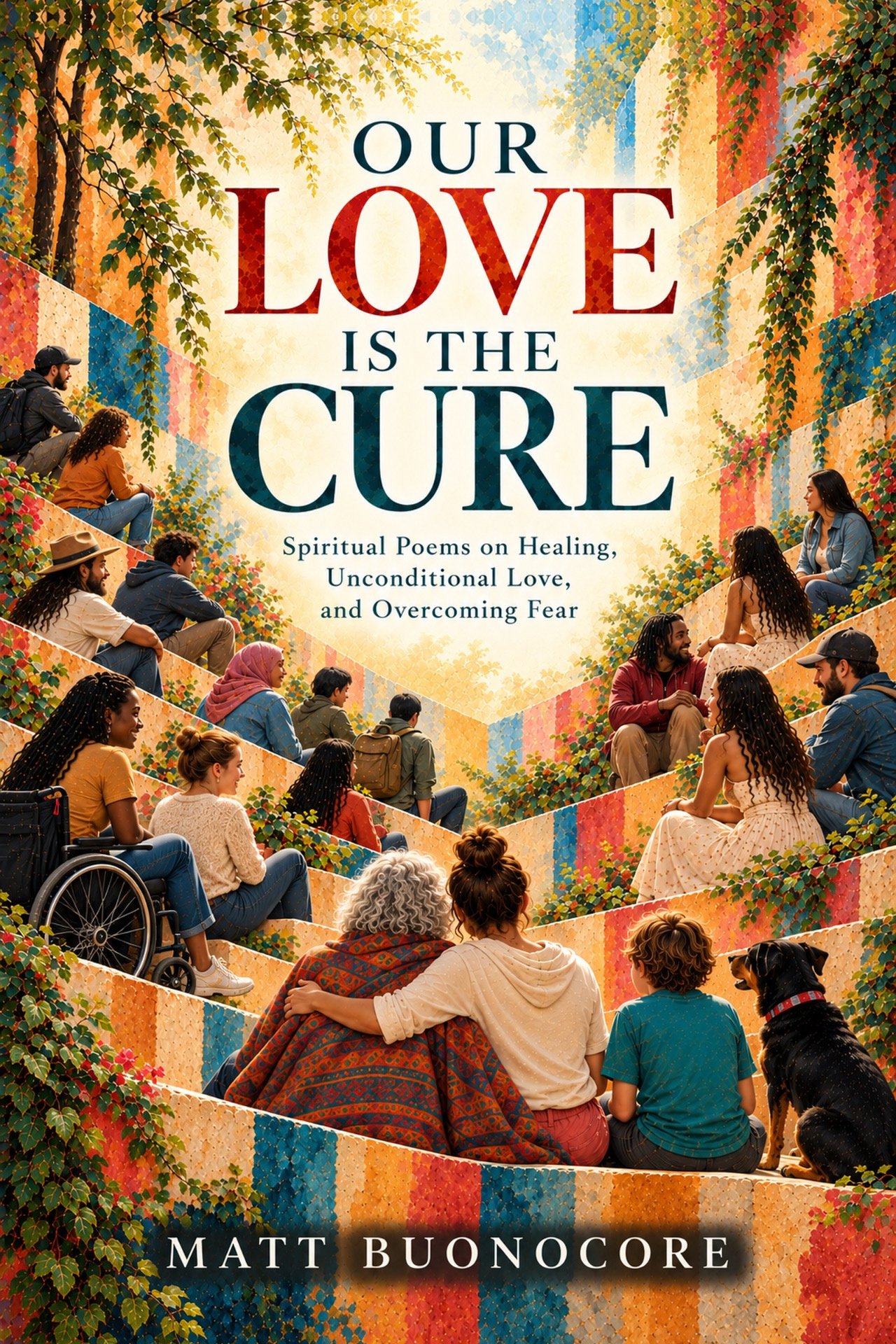
I’ve also written Our Love Is the Cure, which is particularly close to my heart because it explores the idea that love and compassion can help us move beyond the divisions we create between ourselves and others.
Another significant part of my work is a series of short spiritual affirmation books, which explore themes such as remembrance, love, purpose, peace, gratitude, trust, and freedom.
I enjoy working in different forms because each allows me to approach similar questions from a different perspective.
Some books are more reflective, some are more playful, and others are focused on encouraging readers to recognize their own worth and potential.
Although the books vary in tone and subject, I think there’s a common thread connecting them: a desire to help people experience themselves and the world with a little more love, curiosity, and understanding.
Can you share a little bit about your latest book?
One of the books I’m most excited to share with readers is Our Love Is the Cure.
The book explores the idea that love isn’t merely something we give or receive in our personal relationships. It can also be understood as a recognition of our fundamental connection to one another.
So much of our suffering seems to emerge from the ways we experience ourselves as separate: separate from other people, separate from the world around us, and sometimes even separate from our own hearts.
Through poetry and affirmations, the book invites readers to question those divisions and consider what becomes possible when we approach ourselves and others with greater compassion.
I don’t believe love requires us to ignore suffering, disagreement, or the difficulties of being human. If anything, I think genuine compassion asks us to acknowledge those realities more deeply.
The title reflects a conviction that has become central to my life and writing: when we begin to recognize our shared humanity, the way we relate to the world can change.
I’ve made the Kindle edition available for free because I want the message to be accessible to as many people as possible.
How do you think you’ve evolved creatively?
When I first began writing, poetry was largely a way of making sense of my own spiritual experiences.
I was discovering new perspectives, questioning old assumptions, and trying to find language for things that felt meaningful but difficult to explain.
Over time, I think I’ve become less concerned with capturing some grand revelation and more interested in the beauty and complexity of ordinary human life.
I’ve also become more comfortable allowing my writing to be imperfect, playful, vulnerable, and personal.
There was a time when I might have felt that every poem needed to communicate something profound. Now I recognize that humor, uncertainty, and even the smallest observations can be just as meaningful.
I think I’ve also learned to trust the reader more. I don’t need to explain every image or resolve every question.
Sometimes the most powerful thing a poem can do is create a little space for someone to discover something of their own.
As I’ve grown older, I’ve become increasingly interested in how spiritual understanding translates into everyday action, particularly through compassion, relationships, and caring for others.
My writing has grown alongside that understanding.
What is your next project?
I’m currently working on several projects, but two are especially meaningful to me.
The first is an unpublished poetry collection called All the Lives I’ve Been. It contains 80 poems organized into nine sections and explores the many versions of ourselves we experience throughout a lifetime.
I’m fascinated by the way we change, sometimes so gradually that we barely notice it, and yet remain connected to the people we’ve been along the way.
The collection reflects on identity, memory, love, growth, and the strange experience of looking back at earlier versions of ourselves with both recognition and disbelief.
The second project is much more personal. My grandmother Patricia and I have been working on a book about our experiences navigating dementia together.
It’s a project rooted in love, memory, humor, and the importance of being present with the people who matter to us.
Dementia changes many things, but it doesn’t erase the value of the moments we still have together.
I hope the book will eventually offer encouragement and understanding to other families navigating similar experiences.
Both projects are very different, but I think they share an underlying interest in what it means to be human and how we find meaning through change.
What is one great lesson you have learned as a writer?
One of the greatest lessons I’ve learned is that writing doesn’t need to be universally understood to be meaningful.
When you create something and share it with the world, you surrender a certain amount of control over how it will be received.
Some people will connect deeply with your words. Others won’t. Some may discover meanings you never consciously intended.
And I think that’s a beautiful part of the process.
For a long time, I believed that the purpose of writing was to communicate something I understood. Now I think it can also be a way of discovering what I don’t yet understand.
Writing has taught me to pay attention, to remain curious, and to be more comfortable with uncertainty.
It’s also reminded me that the value of creative work isn’t always measured by sales, recognition, or the number of people who encounter it.
Sometimes a poem reaches one person at a moment when they truly need it.
And sometimes the person who needs it most is the one writing it.
Want to learn more about Matt Buonocore?


Leave a Comment