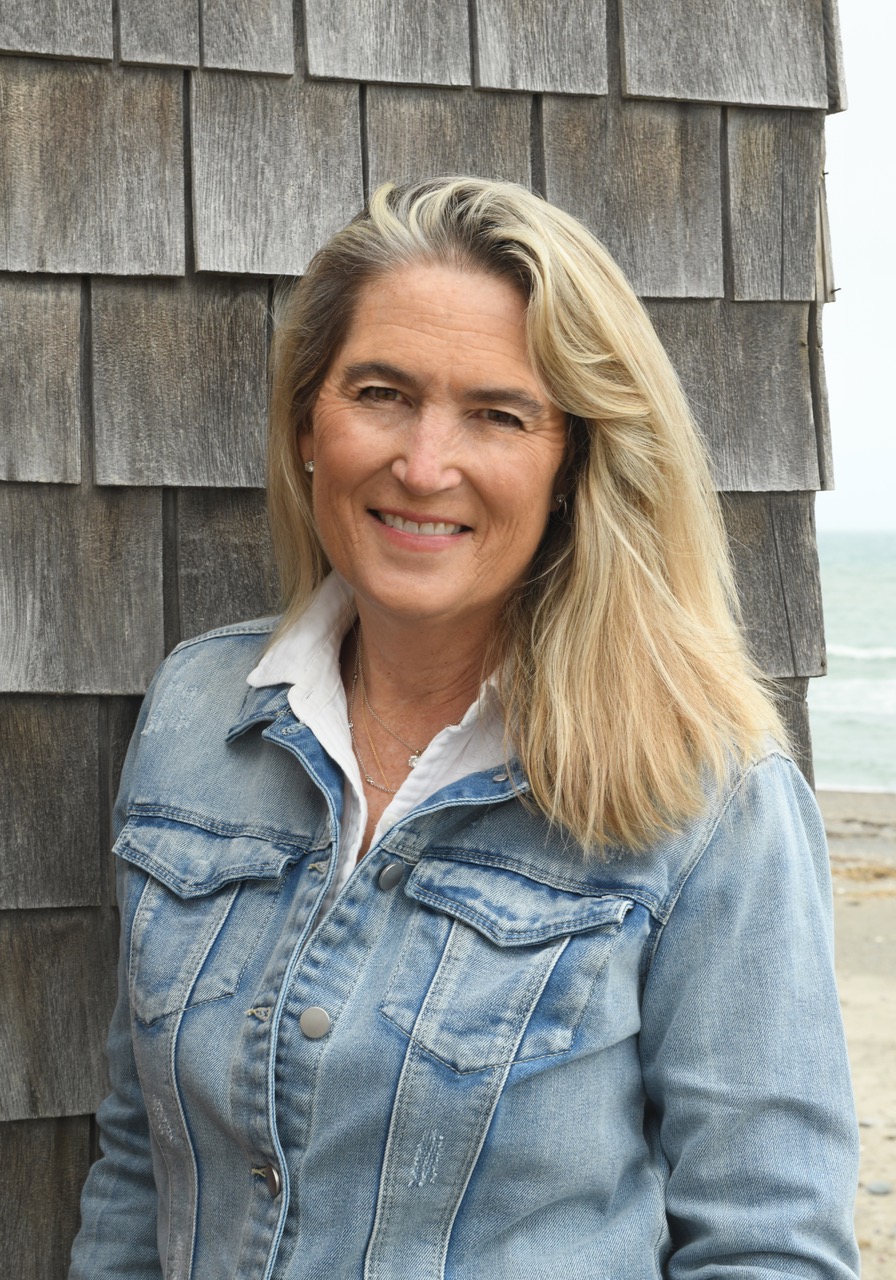
What have you written so far?
So far, I’ve published a family memoir and four novels. Two of my novels are contemporary fiction: Fill the Sky, and my latest, This Much is True, while two are historical novels, including The Hidden Life of Aster Kelly, which was chosen as Pop Sugar’s #1 historical novel of 2023, and Leaving Coy’s Hill, which was a New York Times notable book and was awarded Honors in Fiction by the Massachusetts Book Awards.
What role does research play in your writing?
I love research! Whatever initially draws a reader toward a book, I find it’s often in the details that the story comes to life. Research gives me a treasure trove of details I can use to set a scene or define a character in a way that provides richness and depth. My current novel, for example, involves a family-owned oyster farm and a small town veterinary clinic. It was important to me to do a deep dive into both of those worlds to ensure that even the smallest detail mentioned brings authenticity to the story. And what a great way to learn about places, eras, or industries I’m interested in! I personally enjoy reading novels that allow me to learn something new in a way that is easy to absorb because it’s tucked into a great story. I try to offer that in all my books, and research is critical to making that happen.
Did you independently or “self” publish, or did you go the “traditional” publishing route, and why?
All of the above! I wrote my first book, a family memoir, as a purely personal project and chose self-publishing as the most efficient way to create something enduring for my father and extended family. When I turned my attention to fiction, however, I wanted to pursue a traditional book deal. At the time (this is more than a decade ago now), I saw a traditional deal as a sign of credibility, a quality litmus test, if you will. My assumption was that only the best books make it past the gates of traditional publishers, and if I could do that, it was a signal that I had created something of value. I also assumed that the traditional route would give my books the best possible chance of finding readers. I was lucky enough to publish two novels that way and greatly appreciated the resources that my publisher was able to muster on my behalf, but I have since come to appreciate how many beautiful books never get published and how many bestsellers are more about a strong marketing plan than excellent writing. My goal now is simply to write books I can be proud of and to work with a publisher that is interested in ushering important stories into the world.
If you went the “traditional” publishing route, how did you get your book deal?
As many authors do, I sent a lot of queries (78 in total), and finally landed a fantastic and highly experienced agent. My first novel went to a very small press, which was a great way to start. They were transparent about their publishing process, so I learned a lot, and I had to do most of the marketing and publicity myself, which was fantastic training—it turns out that this is almost always required regardless of what publisher you end up with. My agent sold my second novel to a larger, more traditional publisher. The submission process took over a year, which felt like an absolute eternity, but that novel (and the next) found a home with the perfect editor who was fantastic to work with. My latest novel didn’t quite fit into that publisher’s catalogue, so I’m now with a smaller, independent press that I admire for their entrepreneurial approach. This industry is rapidly changing, so innovation is key to survival!
Can you share a little bit about your latest book?
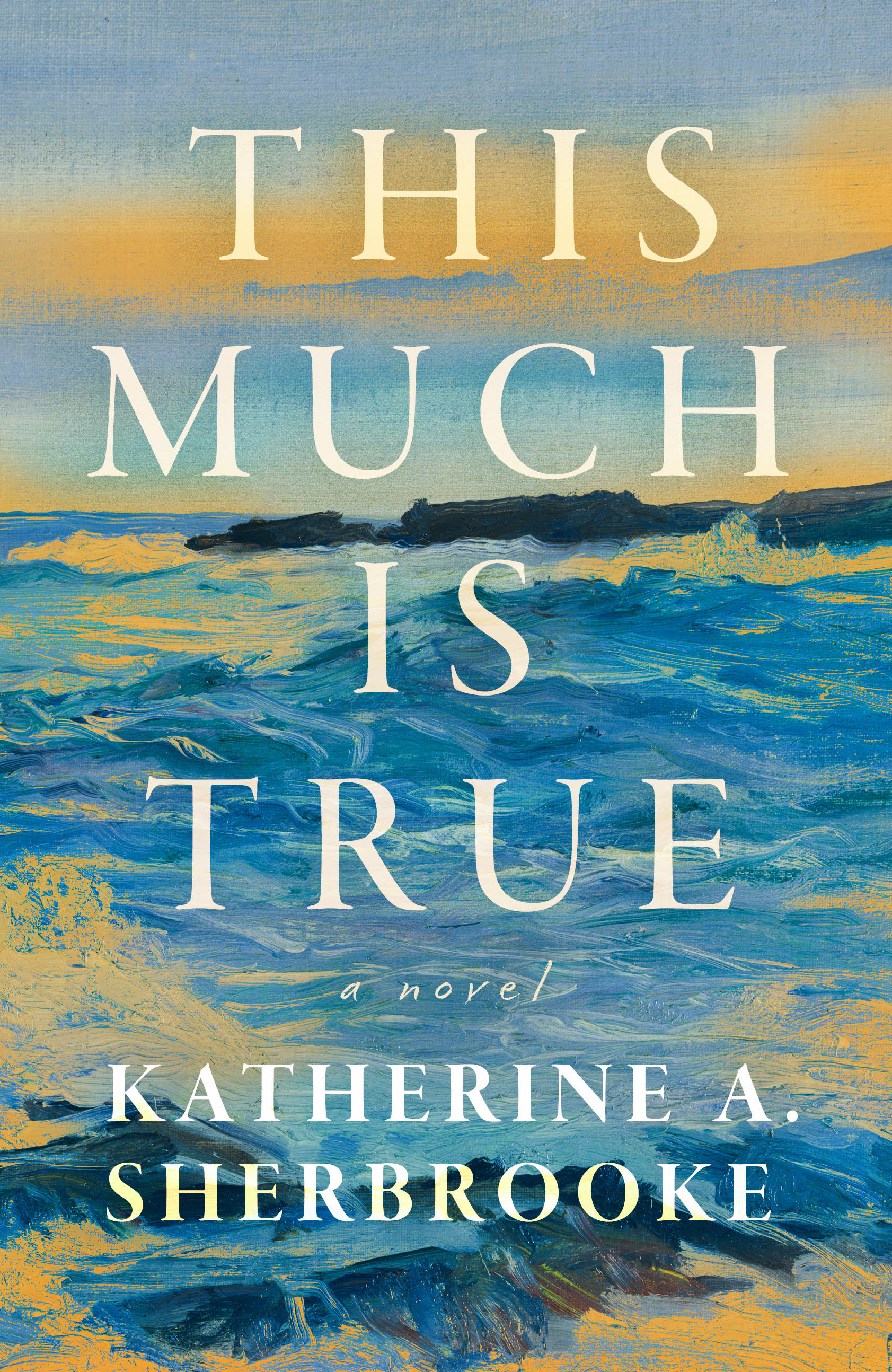
Thanks for asking! This Much is True follows a woman who is forced to reckon with a trauma from her high school years when she realizes that the man who was at its center is set to be her daughter’s future father-in-law. The novel takes place over the course of a weekend, pre-arranged for the parents to “get to know each other,” during which she must decide if she will bury this secret for good or finally speak up, and in so doing destroy her daughter’s future.
What made you decide to sit down and start writing this book?
The premise I just described hit me like a bolt of lightning I wasn’t sure I wanted to touch. Sitting down to write it and figuring out how proved to be two very different things. I gave up on completing this book in favor of writing a different one not once, but twice, because I could not for the life of me figure out a satisfactory solution to the problem I had created for my main character. I mean, what would you do? What would I do? I sat down to write it for the third time because the story would not leave me alone. I decided not to quit this time until I found a way through for my character. I’m so glad I finally did!
Tell us more about your main character. What inspired you to develop this character?
Developing this character was exactly what I had to do to write myself out of being “stuck” at the dilemma’s starting gate. I was determined not to treat any survivor of assault as irreparably broken or incapable of creating a life for herself. Trauma cuts deep but does not define us, and once I dived into understanding who she was at her core and what she cared about, writing the story became significantly easier.
Her name is Veronica Harmon; her husband calls her Ro. She is a highly accomplished veterinary technician and a happily married mother of three grown children. She worked hard to find her own path beyond the fallout of the assault that upended her young life, and in the intervening forty years has built a career and a tight-knit family. She is fulfilled and looking toward her daughter’s bright future as the book opens. And then…
Who is your favorite character in your book and why?
That’s such a hard question! There are several women in this novel, including Ro, who I adore for their strength, honesty, and resilience. But I have to admit that my favorite character is Ro’s husband Davis. Ro endures so much throughout this book that I wanted to give her a truly thoughtful partner who loves her for exactly who she is. He is that man.
What is one great lesson you have learned as a writer?
To work seven days a week on any project I’m serious about (whether drafting or revising). This piece of advice came from Walter Mosley, a wonderful and prolific writer I was lucky enough to hear opine about his writing life. He suggested that art comes from somewhere deep in the subconscious, and that it can take several days on end to access that mysterious space but only a day or two (when we step away from the work) to be yanked out. We are then sent back to the proverbial drawing board, which requires another several days of digging deep to access our creative flow. Too much energy, then, is spent in transition rather than being in a space of effortless creativity. He wasn’t necessarily advocating working eight hours a day, seven days a week, but he did strongly promote the idea of dedicating time every day to any important project, if only 30 minutes on otherwise occupied days, to keep the subconscious engaged. I adopted his advice immediately, and it changed everything for me.
If you couldn’t be an author, what would your ideal career be?
A film director. It’s a bit of a cheat answer because directors are also storytellers. But I think very visually—I never write a scene until I picture it entirely in my head—and I’d love the chance to tell stories in images, dialogue, and sound. That’s a true dream.
Want to learn more about Katherine A. Sherbrooke?

 Waking Writer
Leave a Comment