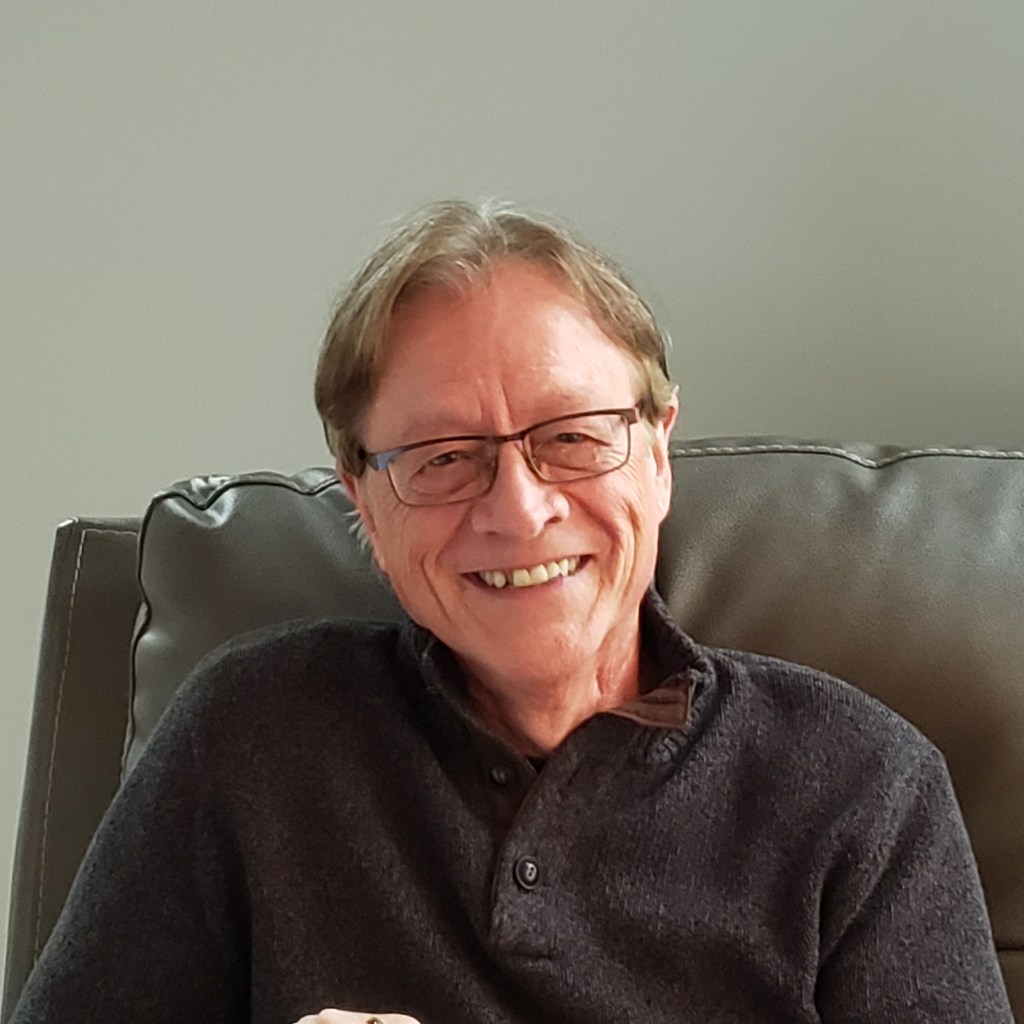
What inspires you to write?
I created the Hank Anderson mystery/thriller series in the pen name Raymond Parish at the intersection between my years of writing nonfiction as a mental health professional and my lifelong love of mysteries. As I was completing the first Hank novel, Overnight Delivery, a second plot came to mind. I was captured by the idea that a series would allow key characters and relationships to grow, change, renew conflicts, and solve new puzzles. As a writer who chose to create a series, I’ve learned not to take the arrival of a new premise for granted. When one surfaces, I’m excited to get to the keyboard.
When did you first consider yourself a writer?
In the 1990s, when my first nonfiction book was accepted by a traditional publisher, the feedback from my editor was, “For a social worker, you’re a good writer.” Prior to this cautious endorsement, I had one publication, a short article in a professional journal. I made the most of her statement and began to look at my passion for writing as a significant part of my career.
Are you a full-time or part-time writer, and how does that affect your writing?
I have always been a part-time writer. However, I don’t see this as apart from my primary career. I view writing as a part of my other work. Hank Anderson is a psychotherapist by trade. My characters are informed by the wide range of professions I’ve had the opportunity to serve and study over my time in the fields of mental health and addictions treatment. These days, fiction and nonfiction writing also connects with my role as an educator.
What are some day jobs you have held, and how have they influenced your writing?
As a youngster, I mowed lawns and delivered newspapers. I spent six years of my adolescence and young adulthood in the restaurant business, doing jobs from cleanup to waiter to food prep to cook to manager. At times, I worked more than one job: dishwasher, food line runner, survey coder, and a brief, dangerous stint as a roofer. My early work history helped to install a work ethic that serves me as a writer. Each of my early jobs contained aspects of creative thinking. Success in each job required that I show up with energy and intention. For me, writing has the same requirements. Specific to my mystery series, Hank Anderson grew up in the family restaurant business. Although Hank’s approach to life is quite different from my own, his love for diners is definitely informed by my history of restaurant work.
What have you written so far?
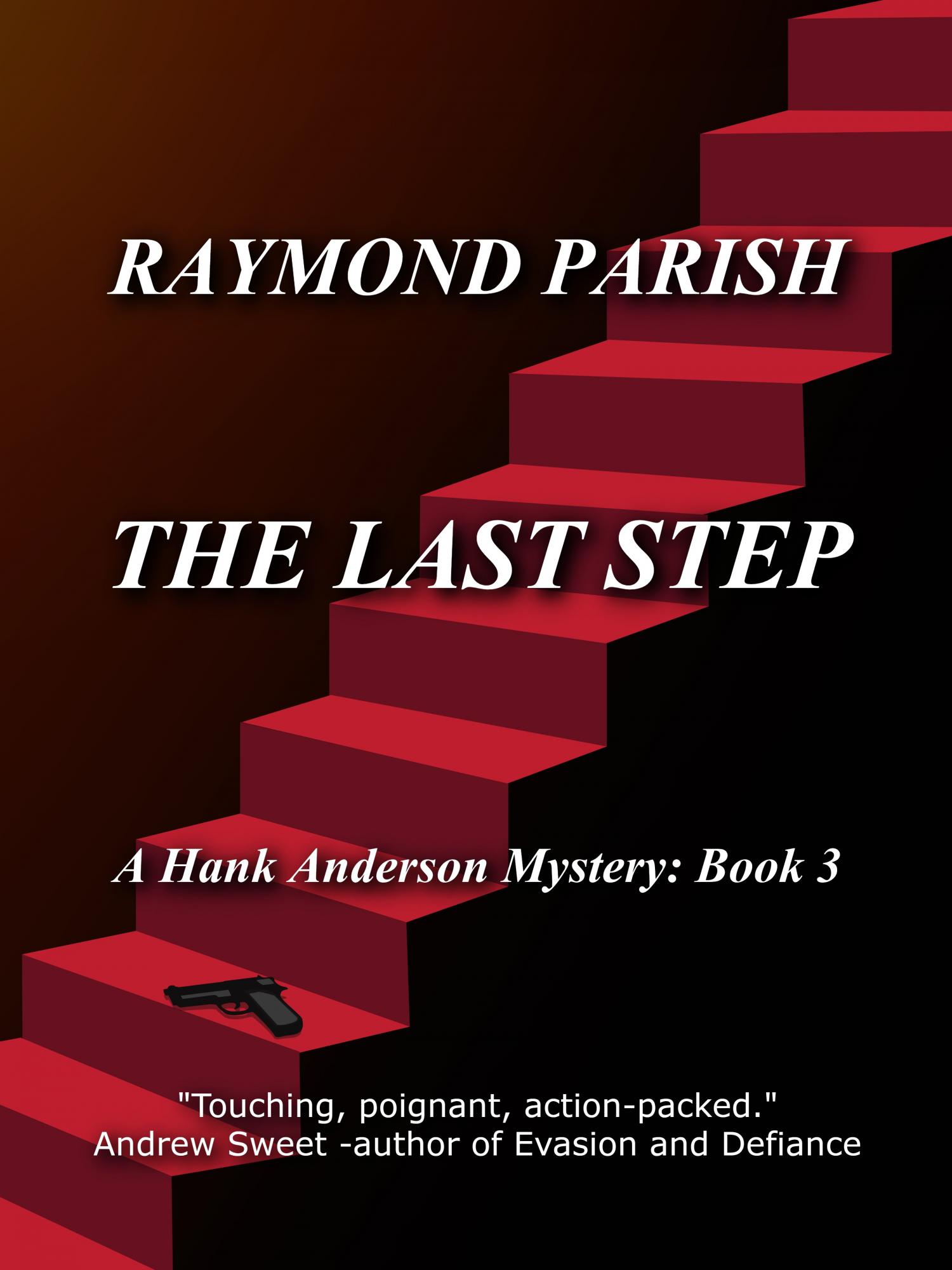
Overnight Delivery, The Mighty Shall Fall, and the book I released this month, The Last Step, make up the Hank Anderson series. In addition, I have continued to occasionally write nonfiction. My most recent nonfiction publication is an article on long-term cancer survivorship, published by Coping with Cancer Magazine.
What role does research play in your writing?
Research is key to each Hank story. My series is set in the Midwest. Authenticity with people and places is important. I read, visit the library, attend webinars, and draw deeply on my experiences with people from a wide-range of professions, cultures, rural and urban settings, sexual and gender identities, socio-economic situations, and life circumstances. Hank’s inner circle contains men, women, and children of diverse backgrounds. One of my maxim’s is: It is necessary to learn as much as possible about people who are not me. Specific to The Last Step, several attorneys and a criminal justice professional from my social circle were critical to the trajectory of a narrative about a large-scale financial crime.
Did you independently or “self” publish, or did you go the “traditional” publishing route, and why?
Several of my nonfiction books have been released through traditional publishers. The experience was valuable, enlightening, successful, and frustrating. When I decided to write the first Hank book, publishing as an indie author made more sense. I wanted to create good work and, on its completion, send it into the world as soon as possible. I use my small circle of fellow indie writers as proofreaders, editors, and mentors, which is both fun and rewarding. Like many other indie authors, the growth of my audience has been gradual. At the same time, having hands-on responsibility for interesting book signings, enjoyable interactions with loyal and new readers, and tapping into resources like Waking Writer has been wonderful.
Can you share a little bit about your latest book?
I believe The Last Step is best represented by a portion of my cover blurb:
Dennis Greenberg is the voice of reason that often rings in psychotherapist Hank Anderson’s ears, a counterpoint to Hank’s moth-to-the-flame attraction to complex, potentially lethal human puzzles. That is, until Hank’s business partner and mentor disappears – without a word. When Dennis resurfaces as the alleged perpetrator in a far reaching financial crime, Hank and his inner circle are thrust into a mind-bending jumble of anonymous threats, the city’s moneyed elite, outlaw bikers, and the mysterious brother whose appearance awakens demons from Dennis’ past. Using his singular talents for seeing and hearing what others miss, Hank thrusts himself into the investigation, with one purpose in mind. To prove Dennis’ innocence. Then, the bodies start piling up…
Do you listen to or talk to your characters?
I start with a premise and a cast of characters, then allow my people to lead me through the story. This can be surprising, even thrilling. It can also be a bit chaotic, requiring me to backtrack when I am moved in a new direction. It has become true that the relationship between Hank and Detective Phil Evans is fundamental to driving each story forward. The catalyst for their connection came to me as a reader, from the autobiographies of rock legend Bruce Springsteen and his band’s sax player, Clarence Clemons, also known as The Big Man. Through the series, listening to each man’s backstory has taken me in the direction of deepening their professional and personal relationship.
Who are some of your favorite authors that you feel were influential in your work?
My dad introduced me to the Hardy Boy mysteries as a kid. They were a springboard to Agatha Christie, Sir Arthur Conan Doyle, Dashiell Hammett, and Raymond Chandler (one inspiration for my pen name). I have also been significantly influenced by the pathos, humor, and clarity of O. Henry, Charles Dickens, and Barbara Kingsolver.
Want to learn more about Raymond Parish?



Leave a Comment