What inspires you to write?
As someone who loves history, I’m greatly influenced by it. So many people find history to be boring. But sometimes we lose sight that history wasn’t some grainy black-and-white photograph. These people lived life in the full spectrum of color. My inspiration to write has been there since I was a child. There is something magical about any creative venture, whether it be writing, playing music, or painting. But as for writing, once characters come to me and their story fleshes out, it feels as though I’m the vessel to get their stories out. Since so many of my stories are based in historical fact, getting their story out seems even more important.
What have you written so far?
I’m the author of five books.
Forever Fleeting immerses readers in pre-WWII Berlin, where Wilhelm Schreiber and Hannah Goldschmidt’s love endures the ravages of war. From Auschwitz to Normandy, their bond is tested in one of history’s darkest times, but their hope remains unbroken.
The Winter Tiger & The War Eagle takes us to WWII, where Kira Kovalyova, the Soviet Union’s deadliest sniper, and Reinhardt Friedel, Germany’s top pilot, form a forbidden love that transcends the war’s brutality. Their story unfolds against a backdrop of Eastern Europe’s frozen battlefields and the enchanting cafes Paris, offering a poignant exploration of loyalty, sacrifice, and love.
The Final Edit is a psychological thriller where Madison, a reclusive editor, is haunted by manuscripts describing her abduction years earlier—details only her attacker could know. As more manuscripts arrive detailing the impending murders of women, Madison must decipher the clues and confront her past to save them.
Gone the Way of the Dodo Bird transports readers to Prohibition-era Chicago, where Johnny De Luca is caught in the violent Beer Wars. With his friends Tomato and Hotsy, he must battle rival gangs and a dangerous gangster in a tale of love, betrayal, and survival amid speakeasies, jazz, and danger.
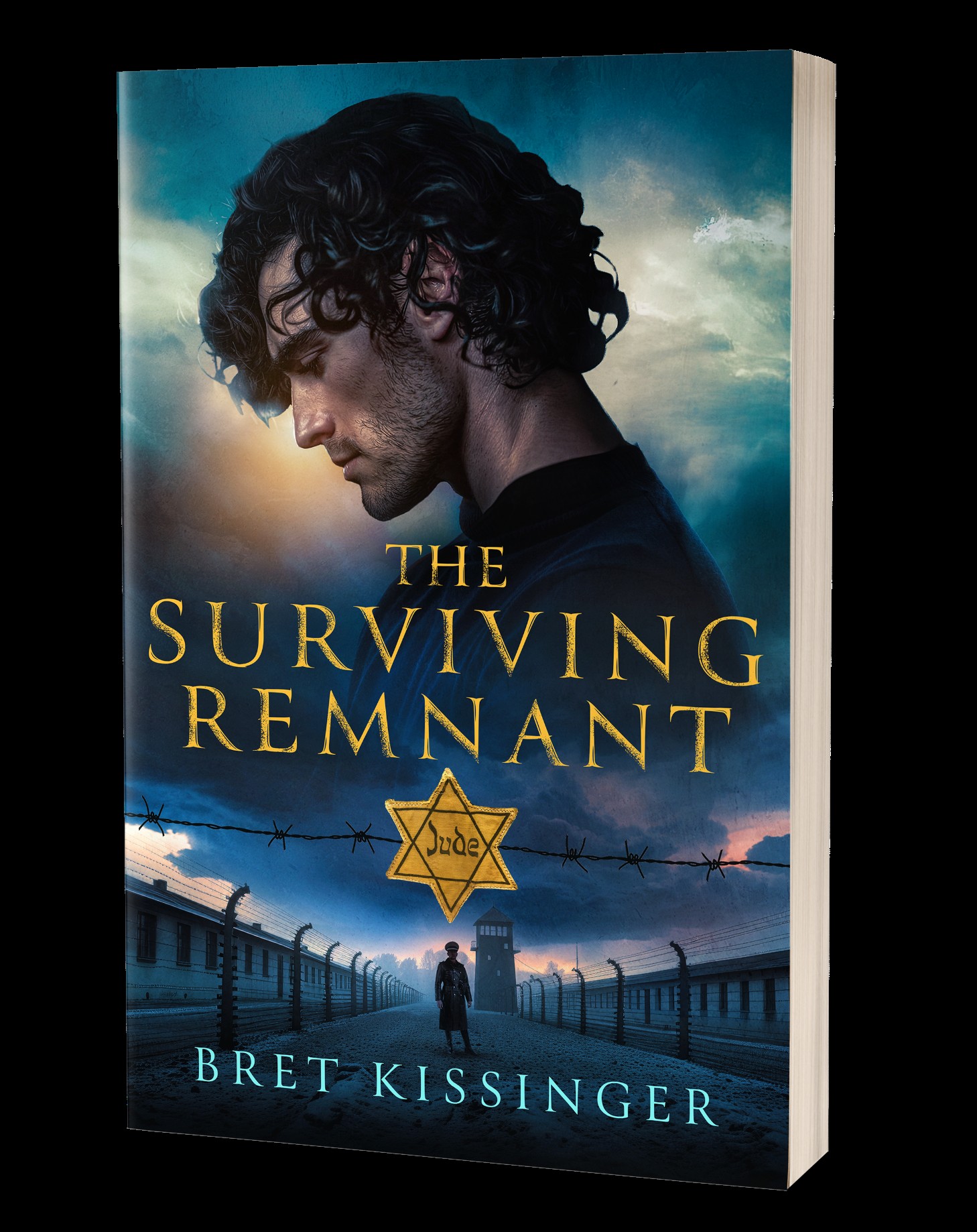
Finally, The Surviving Remnant tells the story of Jakub, a Holocaust survivor who is haunted by his past and given a chance at redemption. Reuniting with old companions, Jakub embarks on a journey from Paris to Argentina in search of a sadistic Nazi guard. Along the way, he confronts painful truths, finds love in a fiery street artist, and must choose between justice and hope for the future.
My goal with all my books is to make the reader feel something that transcends the page. Stories that linger with readers well after reading the final page.
What role does research play in your writing?
Research plays such an integral part in my writing. A hardened rule I have is to not alter history or facts to meet the demands of my story. My story needs to work with history. I view history and facts as bricks and my story as the malleable mortar. My research isn’t just validating dates, but immersing myself in books, documentaries, and movies so that I can truly grasp what life was like. If I write about a full moon on a certain night, know that I have done the research to know what the sky looked like. Knowing and understanding my subject matter is paramount for me to craft a compelling, truthful narrative.
How long does it take you to write a book?
There was a two-year gap between my first and second books and my second and third books. A lot of this was due to the sheer overwhelming amount of research needed to publish a book. Finding cover designers and editors, how to promote and market, and most importantly, the inception of an idea and the writing of the actual book. As I’ve gotten more knowledgeable and efficient, I’m releasing a book every year. I think it’s important that once a rough draft or even a second draft has been completed, to step away from the work for a week or so. It allows us to reexamine our work with fresh eyes and a clear mind. It’s tough to step away, but I think it’s critical. As my writing has improved, the amount of subsequent drafts has lessened. Something I contribute to improving my outlines and understanding that my rough drafts are skeletal: Bones, skull, and a heart. It’s my job in the rewrites to add lean muscle to it.
How successful has your quest for reviews been so far?
Sadly, getting people to write reviews is much harder than I had hoped for. Part of my difficulty is that many of my readers are older and not active online. For others, even providing links and stating that reviews can be a simple rating and a sentence or two, some people still feel it’s too much work or effort. Or they plan to and life happens (totally understandable). I do understand everyone is busy and I’m asking them for a favor. But to the average person, they don’t understand how critical reviews are. It provides authenticity for potential readers and increases the visibility of that book on massive platforms like Amazon and Barnes & Noble. Word of mouth and great reviews are the best marketing and promotion for a book (or any product for that matter!) I truly appreciate every review and the time that person took to write it.
Can you share a little bit about your latest book?
The Surviving Remnant is a deeply emotional and gripping historical fiction novel about the lasting scars of war and the power of redemption. The story follows Jakub, a Holocaust survivor who carries the weight of his traumatic past with him two decades after surviving the Dachau and Sobibor concentration camps. Though Jakub is physically free, his memories continue to haunt him, preventing him from truly living.
The plot is set in motion when Jakub’s cousin Arek and Alicja, the woman he loved in the camps, re-enter his life with an offer that could change everything: they want to track down Ludolf Reichenbach, the sadistic Nazi guard who tormented them. As Jakub embarks on a journey, he must navigate painful truths about his past, reconcile fractured relationships, and decide whether justice for the atrocities he endured is worth sacrificing his chance at a new life.
The Surviving Remnant is not just a story of survival but a powerful reminder that redemption, love, and healing can emerge even from the darkest of histories.
What made you decide to sit down and start writing this book?
The inception of this idea came while I was researching The Winter Tiger & The War Eagle. Most of what the general public knows about the Holocaust is the horror of the camps in the late ‘30s and to the end of the war. But the horrors and effects of the Holocaust didn’t magically end on September 2nd, 1945 with the end of the Second World War. The Survivors of this atrocity tried desperately to find family members. They had to restart their lives with no money, no possessions, and no jobs. I was intrigued to write about this side of the holocaust. All great books ask a question and the question that started my writing was, “What debt do we owe the dead?”
What was the hardest thing about writing your latest book?
The hardest part about writing the actual story is the events I have to put my characters through. To know that these events happened to real people can be incredibly overwhelming. Researching such heartbreaking topics can really weigh on your psyche. It’s cliché, but you really do grow to love your characters, and sometimes you just want to write, “they lived happily ever after.” But as a writer, I ask myself, “What’s the worst thing that could happen to my character?” Then I do that.
How do you think you’ve evolved creatively?
I think the most change I’ve seen in my writing is my confidence. Writing a book is such a personal endeavor. It’s putting your soul onto a page and giving it to the world to judge. Positive feedback has been so instrumental to me. I don’t know if I’ll ever shake that imposter feeling, which I don’t mind. It keeps me hungry and driven to keep getting better.
In addition to my improved confidence, I have increased my reading. I read around 60-70 books a year. Being an avid reader has helped my writing. I know which parts of description I tend to skim over. I know how I like a page to look in terms of the amount of text vs blank space. Knowing what I like to read has allowed me to look at my work through the lens of a reader in addition to a writer.
Want to learn more about Bret Kissinger?

 Waking Writer
Leave a Comment