What inspires you to write?
Honestly, my story ideas can come from anywhere–video-games, other books, movies, real life, what have you–and they always start as a ‘what if’ scenario. A seed from which a story can grow.
This is especially true with my third novel, The Rampion Child. It’s a dark reimagining of Rapunzel wherein the titular girl is the age she was in the original Brothers Grimm fairy tale (twelve), and has been cursed by her obsessive mother to remain twelve forever so as to never become a woman and cease needing her
I got the idea after learning, via the casual reading of a few essays tackling the truth behind fairy tales, that Rapunzel was basically written from an exasperated mother’s perspective. Imagine this: You are the mother of a young girl who, by societal standards, will be of marriageable age before too long. However, you don’t want to let her go yet–if ever. So, you take drastic measures to ensure that no man will ever set eyes on her. She can’t marry if she doesn’t know any men, can she? But lo and behold, a man finds her anyway!
Reading that perspective, I couldn’t help but wonder: That’s a lot of effort to guarantee that your daughter never leaves you. But it’s not a very MAGICAL solution, is it? After all, this IS supposed to be a witch! That’s when it hit me: What if the witch didn’t just lock Rapunzel away, but literally stopped her from growing? Kept her a child forever? One who would never develop a natural interest in men or sex, and who would never stop needing her mommy? From that quandary, the seed of The Rampion Child came into being.
What have you written so far?
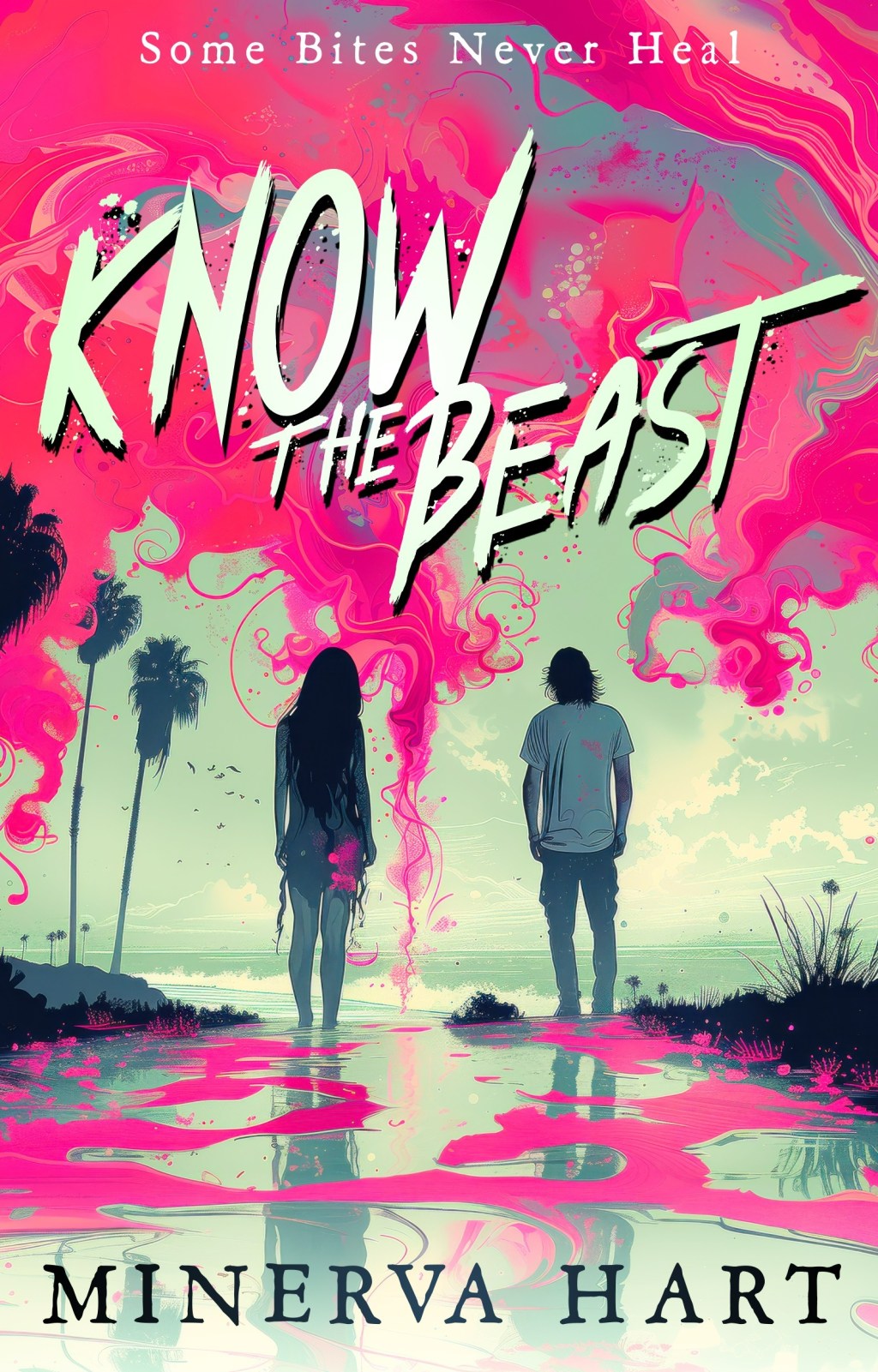
I have written and published four novels since April of 2022. In chronological order, they are: Primal Instinct, The Deadlands, The Rampion Child, and Know The Beast. Naturally, I wrote (but never published) many stories before these, but even at the time I saw them as stepping stones. Little more than exercises to hone my skills.
How long does it take you to write a book?
Between writing the first draft, going through the second, and finally grammar-checking the third, all under the watchful eye of my editor and friend Anaid Monroy, it takes me about a year.
Do you work with an outline or plot sketch, or do you prefer to let a general idea guide your writing?
I’ve heard that writers are often categorized as either ‘gardeners’ or ‘architects’. Gardeners are writers who have a seed of an idea that they then tend to, letting the story grow on its own. This type of writer relies on their emotions and usually comes away with a narrative that is both fresh and exciting. However, since they give their imaginations a blank check, they risk going off-tangent, and their first drafts might require quite a bit of polish. Architects, on the other hand, have a much more planned approach to their tales. They plan ahead, put in a lot of thought before actually writing anything down, and usually have their characters down pat before the reader has even had a chance to meet them. While this leads to fewer chances of writer’s block, the procedure can be rigid. Also, the emotional impacts of plot beats and characters might fall short because the reactions have already been predicted.
Me, I feel like I’m somewhere in the middle. I begin every story with an outline, and I have a general idea who the characters are, but it isn’t until I actually start writing that both the plot and the characters come to life. Even though I already know the story’s main events, I don’t know the connective tissue between them until I’m tapping away on my laptop. And even though I know who my characters are and what role they play, they don’t stand out until I’m writing them out. I might not even have known the protagonist liked their tea extra sweet until I wrote it in a scene! I suppose it can be compared to coloring a picture in a coloring book.
Did you independently or “self” publish, or did you go the “traditional” publishing route, and why?
I self-published on Draft2Digital, which then releases my books on other outlets such as Kobo, Apple Books, Smashwords, and Amazon. This decision came about back in 2021, when I had Primal Instinct and The Deadlands ready to go. They had both been completed, edited, and as perfect as they were ever going to get.
Of course, I wasn’t so naive as to think that publishing houses would be fighting over me, but I still held onto hope. After all, look at all the success stories about writers that have ‘made it’ over the years! Kafka worked at an insurance company to pay the bills, and the only reason we know his name today is because his friend Max Brod–a literary agent, of all things–began publicizing Kafka’s work more than a decade after the man died. Stephen King worked at a textile mill, wherein he worked outrageous twenty-hour shifts with minimal pay. Charles Dickens had to leave school and work in a decrepit shoe polishing factory after his debt-riddled father was sent to prison.
Armed with these facts, I sent one, or both, of my books to any publishing house whose contact information I could find. I also attempted to find a literary agent, figuring that they’d be able to help me navigate the business of books. I met each requirement as well as I could, and sent more emails than I could count. I did this for a full year, holding onto hope that even one publishing house would answer back and give me a chance. But every single person I contacted either didn’t answer–which is an answer in of itself–or replied with some variant of “Sorry, it’s not what we’re looking for”.
I was discouraged to the point that I wondered if maybe I hadn’t just wasted several years trying to do something I’m not any good at. I’d even gotten a Major in English Literature in college! But what if it was all for naught? What if, for all my passion and hard work, I just wasn’t good enough?
But here’s something you must know about me: I don’t quit the game until I’ve played every last card I have. And my last card was the self-publishing route. I’d already selected Draft2Digital in case things turned out the way they had, as I felt that the website provided better service and pay than some of its competitors. So, I published both of my works, and voila! In less than an hour, my book–I chose Primal Instinct as the first–was published. It didn’t seem real days after the fact.
Of course, I soon figured out that nobody was buying it because nobody had seen it. Hence, I needed promotions. But that’s another story!
What advice would you give to aspiring authors?
Focus on the characters, first and foremost. Naturally, the plot, setting, and themes must be handled with thought, love, and care as well, but in my opinion, the characters are a story’s engine. Regardless of whether they are ugly or pretty, cruel or kind, smart or dumb, they must be compelling. Why? Simple: How can a reader be expected to care about anything that happens if they are not invested in the characters? If a reader doesn’t give a damn about whether the protagonist lives or dies, they’ll be reading passively, the same way one might flip through a fashion magazine, if they bother to continue with the book at all.
How do you think you’ve evolved creatively?
I feel like my skills have become more refined over time. I avoid falling in certain traps that I couldn’t help but stumble into when I was younger, and I no longer try to convince the reader to interpret the story my way. Rather, I let them decide the narrative’s moral compass and what they want to take away from it. I think my characters have become more dynamic and, for lack of a better term, alive.
Also, I think–or possibly hope–that my stories have gotten more mature over time. And by ‘mature’, I don’t mean the way it’s often incorrectly used. I’m not referring to copious amounts of swearing, drug use, sexual content, or gore–although all of my stories do have some of those, the same way a dish might have various seasonings. No, what I’m referring to is the depth behind my stories. Each one tackles heavy topics, from environmental collapse to corrupt ruling classes to traumatic childhoods. But I think that, over time, I’ve gotten better at interpreting these themes in my stories.
What role does research play in your writing?
Quite a big role! Even stories that are set in entirely fictitious settings–from post-apocalyptic America in The Deadlands to the fantasy island of The Rampion Child–have a lot of research backing them. For the former, I did a lot of research on American exceptionalism, since that is a big reason for my version of America’s downfall, and the dangers of the ice-caps melting: Besides the obvious flooding, it would also release countless diseases into the warm air. Diseases that humanity either has never seen or hasn’t seen in centuries. In either case, we’d have no immunity to them. With The Rampion Child, I not only researched dozens of mythological monsters, but I also looked into examples of religious oppression and pagan festivities. These were vital in the construction of that book’s setting, the island of Shipbreaker Shore. In my latest book, Know The Beast, I did quite a lot of research on werewolf lore and wolfsbane so that I could build my own mythos within the story. The facts help ground the fiction.
Want to learn more about Minerva’s books?


 Waking Writer
Leave a Comment