
When did you first consider yourself a writer?
When I sold a short story for the first time in 2006. I’d been writing with the intention of being published since 2001. In 2000, I got cancer. I’m fine now, but the experience reshuffled my priorities. In the wake of chemo, it dawned on me that becoming a writer wasn’t going to happen all on its own. That provided the discipline to sit down after work each night and type.
Why did you choose to write in your particular field or genre?
Science fiction and fantasy have always been my favorite genres to read, and I write those because of the freedom they allow. All genres come equipped with rules to be followed, rules that define them. Literary fiction, historical fiction, romance, and others must take place in the real world. That always struck me as too confining. But fantasy and science fiction have rules too. The author just has to define those constraints from the start, and tell the tale within them. It’s akin to designing the straitjacket you will wear.
Are you a full-time or part-time writer and how does that affect your writing?
Now that I’m retired, I’m a full-time writer. That allowed me the freedom to write novels. Before, writing only at night, I could only manage short stories, usually flash fiction at that.
Do you have a special time to write, or how is your day structured to accommodate your writing?
I’ve always been a morning person. The dawn light is excellent to write by. I’ll go to a local coffee shop, and type away until the place gets too busy. There are too many distractions at home. In a coffee shop, I can just concentrate on dragging the story out of my head. The fresh muffins help too.
What have you written so far?
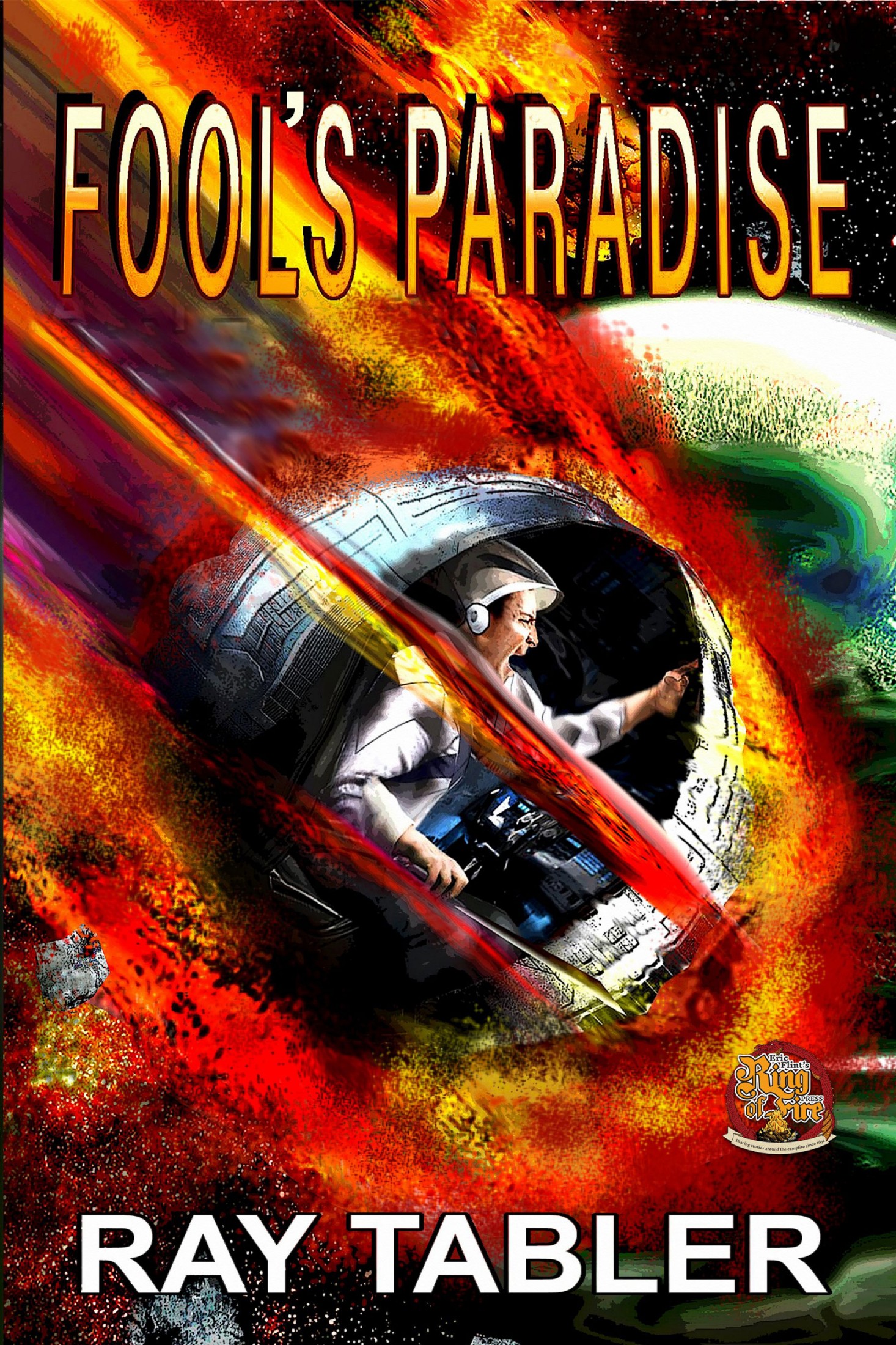
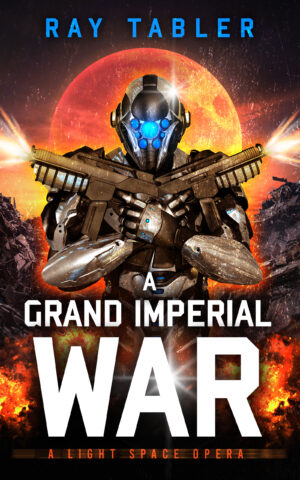
Published to date, about a dozen short stories, and three novels. Two of the novels (A Grand Imperial War, and A Grand Imperial Heir) are the start of a series of what I call light space opera, a humorous take on the subgenre. You might think of it as a space opera staged by Gilbert and Sullivan, while bankrolled and bullied by Flo Ziegfeld. My third book, Fool’s Paradise, is a stand alone novel about a freelance troubleshooter who is hired to retrieve an object of value from a planet which has suffered a disaster and descended into anarchy.
Do you work with an outline or plot sketch, or do you prefer to let a general idea guide your writing?
It had always been my secret shame that I simply started writing, without a firm idea of where the story was going. Or, maybe I knew how it would end, and had to write from both ends to meet somewhere in the middle. Outlining just didn’t seem to work for me. Then I read On Writing by Stephen King, and discovered that he worked the same way. Since that, I’ve found that some judicious planning does help, as long as you don’t get carried away with it.
Can you share with readers a little bit about your latest book?
The Diesel-Powered Starship is about a faster-than-light star drive that won’t tolerate an electrical circuit. Diesel engines don’t use spark plugs, and turn out to be the only way to make it work. The drive field messes with the conductivity of anything within it, so colonists on each new planet have to mine, refine, and build their way back to modern technology.
What made you decide to sit down and actually start writing this book?
The Diesel-Powered Starship bubbled up one sleepless night when I watched a movie called Space Truckers, which is every bit as bad as you might expect. The concept of diesel-powered spaceship lingered in the back of my head. A childhood memory of a visit to a radio astronomy observatory highlighted the difference between gasoline and diesel engines. Diesel engines don’t use spark plugs, allowing them to approach the isolated observatory without disrupting sensitive observation of distant stars. If emigrants to other solar systems can’t bring electricity with them, that sets up a dramatic situation, which I fleshed out as a struggle between breakaway colonies and Earth.
Tell us more about your main character. What inspired you to develop this character?
Maggie Crenshaw is the female captain of a merchant ship, humping cargoes between outer colonies. When a war erupts between Earth and the outer colonies, previous personal commitments drag her into privateering, commerce raiding of ships and colonies loyal to Earth. Maggie’s already complicated life gets murkier as she has trouble figuring out if her side is really any better than the other. She was inspired by accounts of privateer captains during the War of 1812.
Do you listen to or talk to your characters?
Yes, I do. While writing The Diesel-Powered Starship I had plans for a certain character. He was going to have serious reservations, but stick around, providing foreboding and foreshadowing remarks through most of the story. But he got into an argument with the main character. The words got heated, and he stormed out. As I leaned back from the keyboard, I realized he wasn’t coming back. The way I’d written him he absolutely would abandon the main character, no matter how long they’d been shipmates. (No matter how much he secretly loved her, to be honest.) The character was telling me, “I’m leaving. Deal with it.” Looking back on it, I’m glad he did.
What is your next project?
My next novel, Smitty’s Guide to Interstellar Bartending, is awaiting publication by Novus Mundi. It’s the tale of an itinerant bartender, abducted by aliens. Only these aliens have just run out of the juice to wipe his memory, and can’t let him go after the requisite probing. Being a flexible sort, Smitty suggests they just bring him along. Which they do, dropping the embarrassing human off at a convenient space station in another star system. With nothing better to do, of course Smitty opens a bar.
What role does research play in your writing?
Research is a lot easier nowadays than it used to be. In the early 2000s I was writing a story which included a riot in Washington DC. My abilities with the internet weren’t up to snuff back then, so one evening I ended up phoning the front desk of a hotel within a stone’s throw of the White House to ask about sight lines and details like the types of trees and traffic patterns. It must have been a slow night, because the desk clerk spent a bemused half hour answering my questions, once I explained what I was up to. Pull a stunt like that today and you’ll get your name on a list… Actually, I’m not so sure that I didn’t get my name on some list anyway.
Recently, I needed to describe a car chase along old Route 66, in 1947. A few minutes of web searching identified several potential stretches of dangerous road. The winner was a treacherous 20 miles of steep, hairpin turns, and precipitous drop-offs in Arizona, called Sitgreaves Pass. Google Earth, and numerous tourist photos posted online zeroed in on the perfect spot for one of the cars involved to go sailing over a cliff and tumbling into a rocky ravine.
What do you like to read in your free time?
Science fiction and fantasy, of course. But also, I read quite a bit of history, and historical fiction. People have been striving, scheming, and just trying to live out their lives for tens of thousands of years now. The shenanigans we’ve gotten up to never cease to amaze me. And most of it has largely slipped between the cracks of general knowledge. My first novel, A Grand Imperial War, is loosely based upon the Anglo-Persian War of 1857, recast in an interstellar setting. I had to leave out the more unlikely aspects of this actual historical event, because nobody would believe them.
What is one thing you hate about being a writer?
I don’t hate it as much as it annoys me that being a writer has changed the way I watch TV shows. I’ve learned enough about plot and other aspects of storytelling that I can often see twists and endings coming by the second commercial break. Of course, I’m just as often blindsided before the credits roll.
Tell us something unique about you.
I am the luckiest man I know. I believe in luck, because I’ve had much more than my fair share. The most valuable piece of that good fortune is the realization that it’s a gift. The best and wisest thing to do with a gift is to acknowledge it, be grateful, treasure it, and don’t waste time wishing for more.
Want to learn more about Ray Tabler?
Website | Publisher | Facebook | Linkedin | Goodreads | Amazon

 Waking Writer
Leave a Comment