
When did you first consider yourself a writer?
From the time I was in elementary school. I remember my fourth-grade teacher asking us to write an essay about Thanksgiving and I wound up writing a story about a talking turkey. My teacher got such a kick out of it that she had me read it to the entire class. Afterward, she took me aside and told me that I really should pursue writing. And I remained involved with writing from then on.
Why did you choose to write in your particular field or genre?
In fact, most of the writing I’ve done throughout my career has been essayistic non-fiction or reporting. My first novel, Lord of the Wood, was written in the genre of fantasy/paranormal storytelling, which has always fascinated me. From the time I was a kid watching the Twilight Zone on TV, I’ve been consumed by these types of subjects. Realistic fiction is not for me.
How do you think you’ve evolved creatively?
Through reading and writing over long periods of time, I think that my skill level has become more finetuned. I also believe that I’ve now become able to liberate my imagination and allow it free reign so that the creative process isn’t stilted or restrained. It’s sort of like learning to play a sport—the more you do it the better and more natural you become at it.
What have you written so far?
In addition to many years of writing opinion columns and news reports for many of the business-to-business journals I published, I’ve written two business memoirs on behalf of two luminaries who were stars in the industries I covered, and my first novel, mentioned above. I am in the process of beginning a second novel based on one of the key characters from the first book. In this story, she’s transported from her home turf of Eugene, Oregon to New York City where she experiences a unique series of paranormal events separate and apart from the first tale.
How do you feel about indie/alternative vs. traditional publishing?
Independent or self-publishing has proliferated dramatically over the last decade, partly due to the accessibility of Amazon book retailing as partly due to the fact that the traditional publishing field has shrunk largely due to consolidation. Of course, traditional publishers are also hard to crack, often take years to bring a book to market, and typically don’t pay very well. Having said that, independent publishing can be a slippery slope, too. New, online self-publishing shops pop up every day and their quality (as well as professional integrity) can vary a great deal. An author needs to do her research before undertaking one of these providers.
Did you make any marketing mistakes that you would avoid in the future?
Yup. My biggest error was in hiring a book marketing services company that made many promises but fulfilled very few. They also kept changing personnel frequently. As I said before—research, research, research before signing on with these suppliers.
What advice would you give to aspiring authors?
Dive in and do it! Don’t ruminate on it, just sit down at the computer and do it. Earlier on, writing would make me feel very self-conscious; I’d always imagine there were one hundred dead writers standing around, watching me try to work. I had this metaphoric image I had conjured up to help me understand it: I’d imagine that I jump into a pond and swim out about halfway, whereupon I’d realize that I really can’t swim and invariably swim back. The fact that I could swim (write) was overtaken by this fear of swimming out too far.
Can you share with readers a little bit about your latest book?
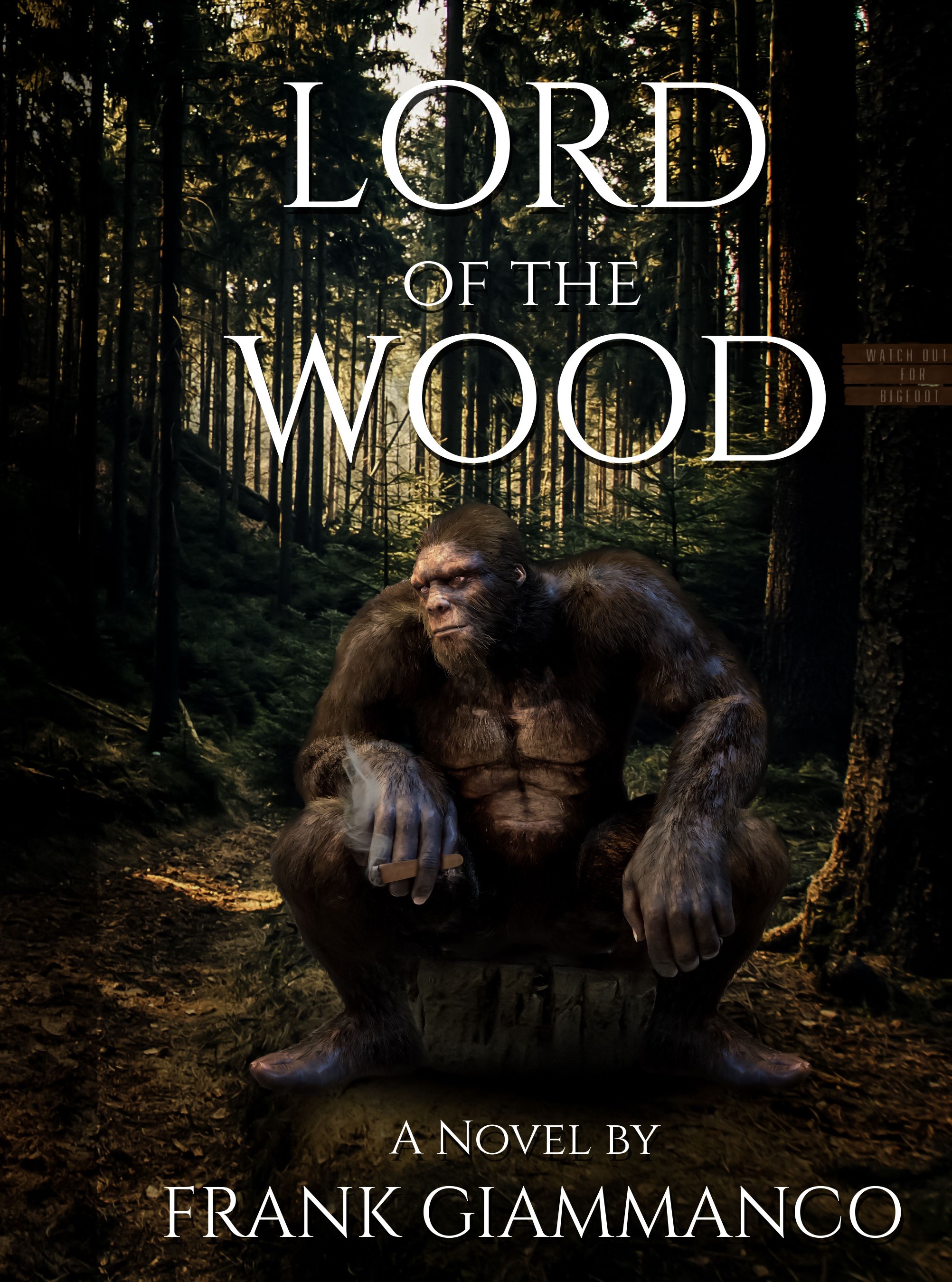
Sure. Lord of the Wood focuses on protagonist, Sonny Bursa, a business exec from New York, who goes on a business trip to Eugene, Oregon in a last-ditch effort to save his job. While there, he spots what he eventually realizes is a Bigfoot and becomes obsessed with the visions. Returning to New York, he cajoles his best friend, ex-wife, and her current flame to return with him to Oregon to validate his vision by hunting for Bigfoot. They’re guided by a Native American shaman Sonny met on his first trip. At the same time, a local investigative news team with a cryptozoologist in tow are in the same dense forests looking for the same creature in order to film a documentary. Much stuff happens, and much of it is kind of funny.
What one person from history would you like to meet and why?
Unequivocally, Ernest Hemingway. I’ve admired Hemingway’s work since I was in high school. His writing is clean, straightforward, and classically American. I’m sure if I got to sit down for a drink with him, I’d have a million questions about the craft. I actually have a book that’s a distillation of various snippets of advice he gave others on writing. One item he wrote that I find both true and funny is “Whatever you do, don’t forget about the damn weather”. And I don’t.
Want to learn more about Frank Giammanco?
Website | Facebook | LinkedIn


 Waking Writer
Leave a Comment