When did you first consider yourself a writer?
I have always felt that I was a writer, from childhood onwards. I love trying to capture something felt or seen in a poem, or to write a story and create characters as vividly as possible. As soon as I could read I felt that, whatever else I did in life, I would be a writer too.
Why did you choose to write in your particular field or genre?
I am fascinated, in particular, by the Georgian and Victorian eras. My favorite novels were written then. I find researching and writing stories set in those periods deeply satisfying. I like to write in a classic style and historical novels suit that inclination. Lives and times were very different for people in the past, whilst human nature remains the same, which makes it so interesting to explore. It is an enjoyable challenge to make sure there are no anachronisms, which can creep in so easily!
Are you a full-time or part-time writer and how does that affect your writing?
I am a part-time writer, as I am still employed full-time in local government. I find it concentrates my ideas doing my writing at weekends and in my leisure time. I think the imagination is working away somewhere in the background when I am busy at my day job in the week, so that my ideas are more distilled when I come to start writing again at weekends. I begin by writing notes or sections longhand and then type the story up as it develops. It gives me the creative outlet which I need and do feel driven to achieve.
What have you written so far?
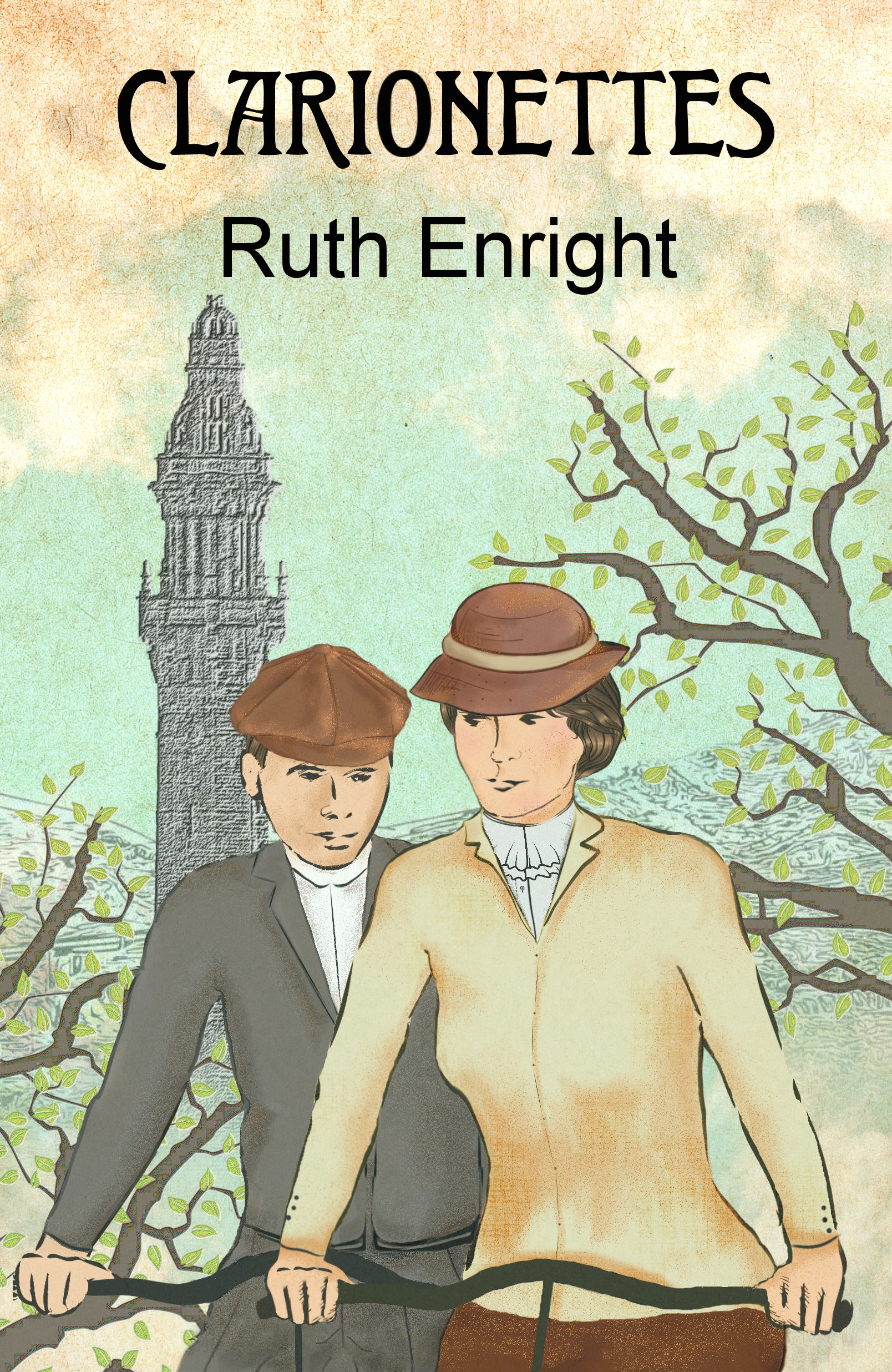
I have had three historical novels published by Blossom Spring Publishing. Seahaven is set in 1700s England on the wild East Coast of Yorkshire. Button Box is a time travel story set between modern day and Victorian London. Clarionettes, my latest book, is set in my home town of Halifax, West Yorkshire, in 1896, when the Clarion cycling club movement enabled men and women to mix in a new way. I have had a number of short stories published in Yours Fiction Short Story Quarterly Magazine. I also have a website where I self publish poems, short stories, tv reviews, albums and other pieces. Not all the writing is historical, as I write modern short stories on there and for the magazine too.
Do you work with an outline or plot sketch, or do you prefer to let a general idea guide your writing?
I start with a general idea of something that inspires me or has given me an idea and see where it takes me, developing it as I go along. I will then plot out parts of the narrative to structure the story. The ones that take off are often founded on a place, time or idea I have always wanted to build a story around and something gives me that vital piece of inspiration to bring it to life.
How did you decide how to publish your books?
I looked into publishing opportunities today and learned that there was a greater chance of being accepted by an independent publisher if they saw talent and a marketable book in the work submitted and, very luckily for me, I found success! I researched for a publisher based in the area I was writing about initially, (Whitby in North East Yorkshire) and sent my book Seahaven to Blossom Spring Publishing, who accepted it and later my two other novels. In the past, and I’m talking 1980s here, I submitted typed manuscripts to the traditional publishers but did not quite get there, although I received very good feedback about my talent and nearly made it into a Penguin’s poetry anthology for young writers in my twenties. Now, the internet has opened the door for different ways into publishing. Coming back to writing more recently, I began by self-publishing on my website in 2017, next submitting short stories in 2020 and 2021 which were published by the magazine and, encouraged by that, have had all three of my novels published. Seahaven came out in 2021 and Button Box in 2022. Clarionettes was published on August 8th this year, 2023.
How do you feel about indie/alternative vs. traditional publishing?
I think it is a very positive factor in opening the way for more books to be published in a creative partnership, unblocking the ‘closed shop’ feel that there is no way into traditional publishing unless you are a known writing name, have the connections to become best seller material, or are a celebrity of some kind. Indie/alternative publishing enables writers to flourish and be recognised in a vibrant new marketplace.
How do you market or promote your books and what strategies (e.g. social media, email, blog tours, etc.) have demonstrated the most success for you?
I have promoted my books with social media, podcast interviews and blog tours. The blog tours certainly resulted in more reviews, which helps to raise the profile of books published on Amazon. The podcasts were a great opportunity to talk about my writing in person to an interviewer and be promoted, both on radio and on line. I entered both my previous novels to ‘Chill With A Book’ and was awarded the very prestigious Premier Readers’ Award for each, which I an very proud of.
What advice would you give to aspiring authors?
Enjoy the writing above all and keep trying!
Can you share with readers a little bit about your latest book?
Clarionettes was inspired by seeing, as a child, two names carefully carved into the flat top of a rock escarpment on Albert Promenade, a local beauty spot in Halifax near my home. I always wondered who ‘J. H. Henderson and C. J. Raynor, 1896’ might have been and thought that, one day, I would write a story about them. Reading about the history of the radical Clarion Club gave me the inspiration for a fictional back story for that. Cycling was a real liberation for women in those days. In my book, a diverse group of young men and women from different classes come together as Clarionettes in the Halifax Clarion Club. They are full of idealism, hoping for a new and freer future. But freedom means different things to each of them, as they will come to find out. A single drastic act creates an unstoppable momentum in the lives of those both inside and outside their group. They meet as artists, rebels and romantics who will become conflicted allies, enjoying new times as friends and lovers but facing danger, heartbreak and loss. Together, they find futures they could never have imagined.
Want to learn more about Ruth Enright?


 Waking Writer
Leave a Comment