Why did you choose to write in your particular field or genre?
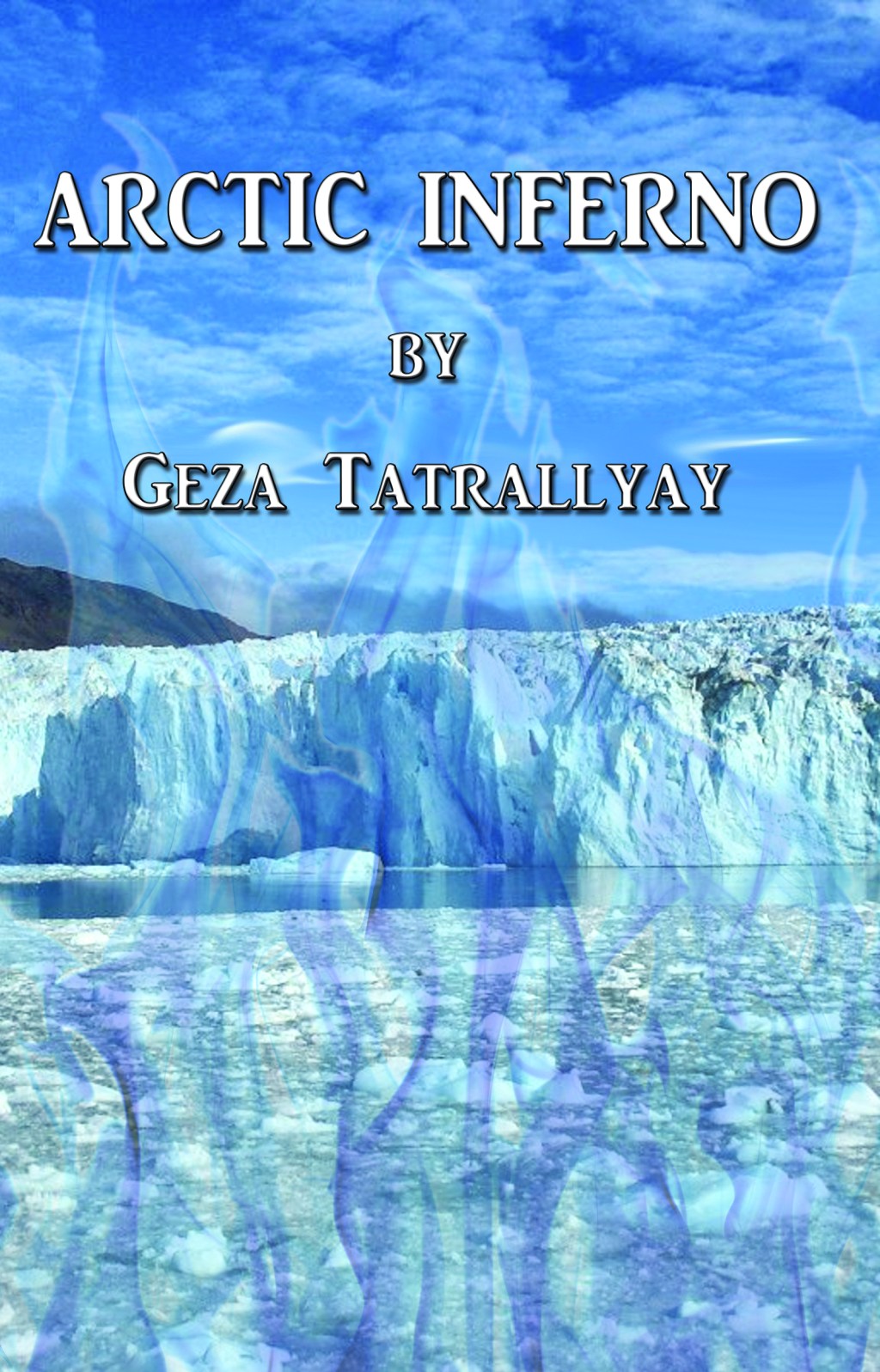
I first got interested in the thriller genre when we were living in Vienna, where the movie The Third Man, one of my favorite films, is set and is still featured a lot. I thought it would be fun to write a modern-day take-off on the novel by Graham Greene it is based on, and that was the genesis of Twisted Reasons and my Twisted trilogy. Also, I have always been concerned with climate change – my mentor at Harvard was Professor Roger Revelle, who was one of the first scientists to focus on the Greenhouse Effect as one of the causes of global warming. I spent two summers in the Canadian Arctic working for the Geological Survey of Canada as a student, and already then, there were some tangible impacts of climate change there. So, putting all that together with a lot of my research provided the genesis for the two thrillers on the Arctic.
What is the most important thing that people DON’T know about your subject/genre that they need to know?
The one thing I would highlight re the subject of Arctic Meltdown and Arctic Inferno that people don’t know much about is the extent to which Russia has militarized its Arctic zone. As with Ukraine, Putin and his cohort see the Arctic as an integral part of Russia. Along its more than 3,700 miles of Arctic coastline Russia has modernized and expanded its existing military installations and constructed numerous new facilities. Its Northern Fleet has been substantially upgraded and the Northern Sea Route is a major national security concern for Moscow. NATO has been left far behind in military capability up north. Also, one of the main reasons China is so buddy-buddy with Putin’s Russia is because of the Northern Sea Route which hugely cuts down on transport times for Chinese goods to the USA and Western Europe.
What have you written so far?
With Arctic Inferno, sixteen of my books will have been published – six thrillers, five poetry collections, three memoirs, one short story collection and one children’s picture story book. I have also just completed a seventeenth book, The Purple School Bus Murders, a murder mystery set in Vermont that is now with my agent.
Do you work with an outline or plot sketch, or do you prefer to let a general idea guide your writing?
For my thrillers and memoirs, I usually sketch an outline, but especially with the thrillers, the end-product takes unforeseen twists and turns, with new characters introduced as appropriate or needed, and often ends up being quite different from the original outline.
However, with my new murder mystery, The Purple School Bus Murders, I consciously did not do an outline. The idea emerged from a short story, The Purple School Bus (published in 2021 in my short story collection, The Mind Spins), and took off from there – first, the back story started to be filled in, but as this took place, new plot lines and characters materialized and the front story went on from there. I must say, I really enjoyed this uncharted process, and I think the resulting book is fun and very interesting. The readers will need to judge once it is published.
Can you share with readers a little bit about your latest book?
I actually started writing Arctic Meltdown in 2007 or thereabouts out of frustration because no one was paying attention to what was happening in the region. Since I couldn’t find a publisher interested in the story, I self-published an ebook version of it in 2011. Once I was well entrenched with Black Opal Books, my thriller publisher, they wanted to publish a 2nd updated edition in both ebook and paperback formats, and I have since also brought out an Audiobook version of it. I wrote this second book in the series, Arctic Inferno, in an effort to explore some of the issues in greater detail and again bring attention to them.
Tell us more about your main character. What inspired you to develop this character?
The main character in Arctic Inferno is Hanne Kristensen, a talented and beautiful Danish geologist, expert on the polar icecap and the glaciers of Greenland, who ends up being chosen to be the first Minister of Natural Resources and the Environment for the island nation when it finally becomes independent from Denmark. I wanted an attractive female in the main protagonist role, especially since the usual view of the Arctic explorer or guru is of a bearded, grubby male. I also wanted her to be out of the normal and exceptional in other ways.
What is your next project?
After publication of the just completed murder mystery, The Purple School Bus Murders I hope to bring out a new edition of my very first memoir, For the Children. I have already done a first draft. This is the story of my family’s escape from Stalinist Hungary in 1956 – I originally wrote it down for my family, then built the historical context around it and put it out for publication in 2014, right around the same time as my first thriller, Twisted Reasons. It was finally picked up and published in 2015 by a publisher that has not been very responsive to my needs / requests and has been delinquent on royalty payments. I have therefore terminated the contract with them and done some revisions and additions to the original manuscript so it will hopefully get picked up by another publisher.
Also, my three latest poetry volumes, Extinction, Extinction Rebellion and The Abyss: Poems for our World celebrate the world around us and other species of life and disparage what we are doing to it and them, as well as ourselves. Along the way I have written many poems about different forms of animate life, so what I am in the process of doing is pulling these poems together and with a few new ones, I would like to publish a collection of what I call my “Beastie” Poems. There is enough material there so it could be a full volume or else I could cut it back as a chapbook.
I have also started working on turning my poetry collections into Audiobooks, starting with Extinction, with me reading my own poetry. All my thrillers are already Audiobooks, and I have managed to get some great readers for them through ACX.
What role does research play in your writing?
Research is extremely important for my thrillers and memoirs. I think a good author in these genres should provide his / her readers with learning as well as an interesting story – that is, with thrillers, as the name of the genre suggests, “thrills”. I did meticulous research for my Arctic books on the effect of climate change on the polar ice cap and all that means for the countries up there and the peoples living there, including an eye-opening trip to Greenland.
A lot of research also on the active and aggressive militarization of the Arctic especially by Russia, with NATO countries now struggling to catch up. One of the stunning facts is that there is no real legal regime governing the Arctic, like there is the Antarctic Treaty for the southern polar region, and in a sense, this is what my two Arctic novels are predicated on. The claims for seabed and resources by different countries are based on the more generic UNCLOS, the UN Convention on the Law of the Sea, and rival claims are adjudicated by a UN commission – much of this is the basis for the first book in the series, Arctic Meltdown, the heroine of which is the architect of an Arctic Treaty similar to the one in the south. In this sense, my series is aspirational and prescriptive, demonstrating the need for such a treaty, especially now that the Arctic is becoming a free for all zone.
If there was one thing you could do to change the world, what would it be?
I’d like to stop or slow climate change, certainly our contribution to it. Unless humanity unites around this goal and does everything in its power to stop contributing to it and to mitigate its deleterious effects, we will wipe ourselves out along with most other living species.
Want to learn more about Geza Tatrallyay?


 Waking Writer
Leave a Comment